Smart glasses have finally arrived — and in 2026, they’re genuinely worth buying. After years of clunky prototypes and tech demos that never quite lived up to the hype, the smart glasses market has matured into a legitimate category with distinct, polished options for nearly every type of user.
Whether you want a hands-free AI companion that answers questions while you walk to work, an enormous virtual cinema screen for your morning commute, or a developer platform you can build on, there’s a pair of smart glasses in 2026 designed exactly for that. Sales of AI-powered eyewear have surged, with the Ray-Ban Meta alone claiming the title of the world’s #1 selling AI glasses with millions of units shifted. Meanwhile, CES 2026 delivered a wave of new entrants pushing AR displays to new technical limits.
But here’s the challenge: “smart glasses” in 2026 is an umbrella term covering three very different types of hardware. Buying the wrong kind is the most common cause of buyer’s remorse in this category. This guide will help you avoid that mistake.
We’ve researched the entire market, analyzed the specs, dug into real-world reviews, and broken down every major contender so you can find the best smart glasses for your specific needs — whether you’re on Android, iPhone, or PC.
Smart Glasses Quick Comparison Table
Before we dive deep, here’s a high-level overview of the top contenders:
| Smart Glasses | Best For | Key Features | Battery Life | Price Range |
|---|---|---|---|---|
| Ray-Ban Meta Gen 2 | Everyday AI use & creators | Llama 4 AI, 3K camera, open-ear audio | Up to 8 hrs | ~$379–$499 |
| Meta Ray-Ban Display | AR display + AI | HUD monocular display, 12MP camera, Meta AI | ~4–5 hrs | ~$799 |
| XREAL One Pro | AR display & media | 57° FOV, 171″ virtual screen, Bose audio, X1 chip | Passive (cable-powered) | ~$599–$699 |
| XREAL 1S | Budget AR display | 52° FOV, 1200p, 120Hz, 82g frame | Passive (cable-powered) | ~$449 |
| RayNeo X3 Pro | Standalone AI & travel | Gemini AI, waveguide AR, SLAM navigation, standalone OS | ~6–8 hrs | ~$499–$599 |
| Rokid AI Glasses | Budget AI & creators | ChatGPT-5, 12MP camera, 10-min video, 38.5g | ~5–6 hrs | ~$299–$349 |
| Apple Smart Glasses | TBD — rumored for late 2026/2027 | Unknown — reportedly microLED display | TBD | TBD |
The Best Smart Glasses in 2026
Understanding the Three Categories First
Before jumping to individual products, it’s critical to understand that smart glasses in 2026 fall into three hardware architectures — and they are not interchangeable:
- AI/Camera Glasses — Look like regular glasses. Built for hands-free AI interaction, photo/video capture, and audio. No screen. Examples: Ray-Ban Meta Gen 2, Rokid AI Glasses.
- XR/AR Display Glasses — Cable-connected wearable screens that project a massive virtual display. No standalone smarts. Examples: XREAL One Pro, XREAL 1S.
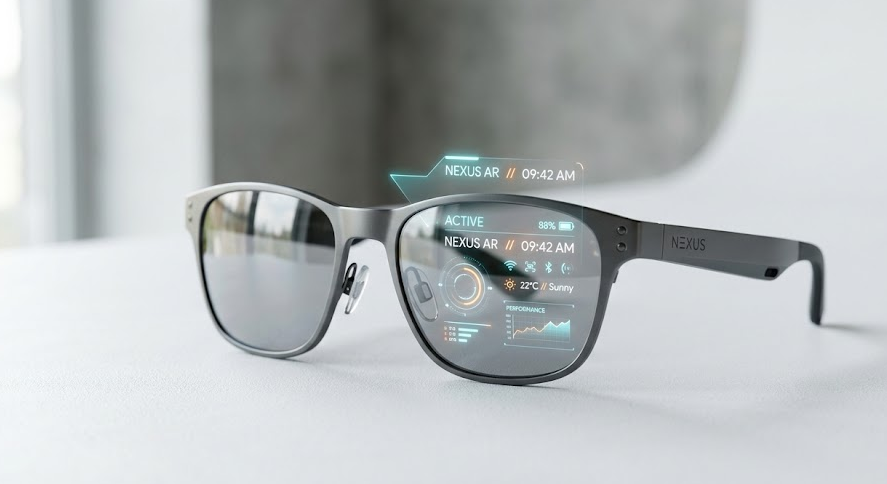
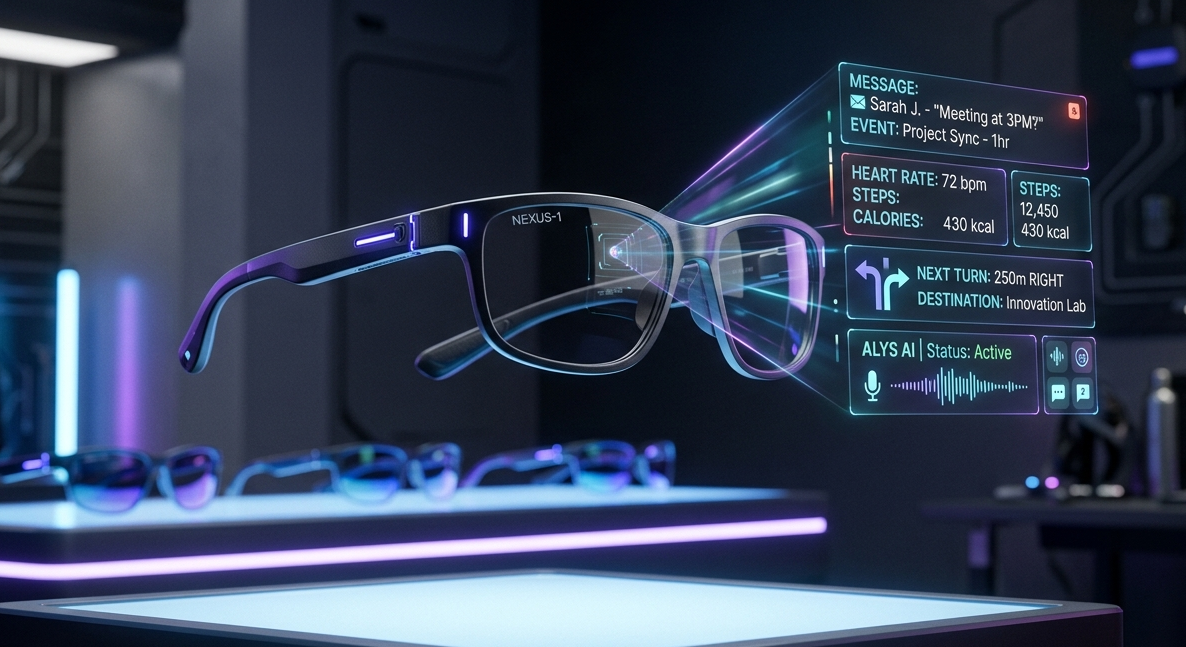
- Standalone AR Glasses — Independent computers with waveguide displays that overlay digital info onto the real world. Most advanced — and most expensive. Examples: RayNeo X3 Pro, Meta Ray-Ban Display.
Knowing which category fits your life is the first and most important decision you’ll make.
1. Ray-Ban Meta Gen 2 — Best AI Smart Glasses for Everyday Use
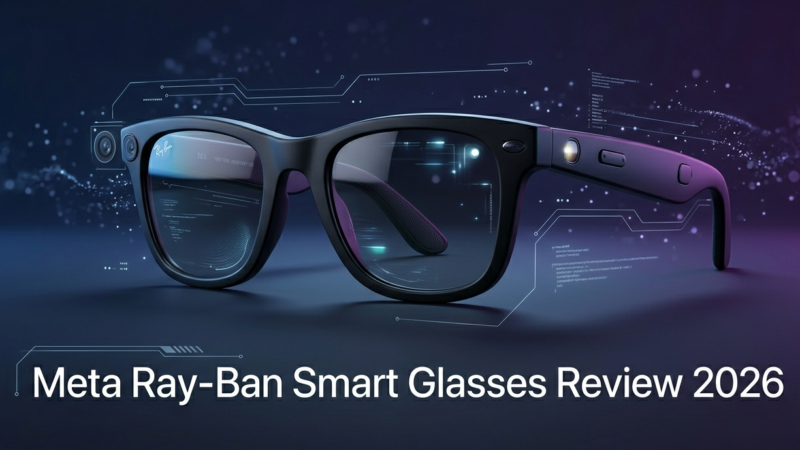
The Ray-Ban Meta Gen 2 is the most approachable, most fashionable, and most used pair of smart glasses on the planet right now. If you want a taste of the AI glasses revolution without looking like you work in a research lab, start here.
Overview: Built on the iconic Ray-Ban Wayfarer and Headliner frames (with Oakley sport variants also available), the Gen 2 looks indistinguishable from a premium pair of sunglasses. The magic is underneath: a 12MP camera, five microphones, open-ear speakers, and a deep integration with Meta AI powered by Llama 4.
Key Features:
- Llama 4 AI integration with hands-free “Hey Meta” voice activation
- 3K Ultra HD video capture at up to 60fps with ultrawide HDR
- Up to 8 hours of battery life — nearly double the Gen 1
- 50% charge in just 20 minutes; charging case provides an additional 48 hours on the go
- Live translation across six languages, even in airplane mode (with downloaded packs)
- Compatible with iOS and Android via the Meta View app
- New “Conversation Focus” feature: AI amplifies the voice of whoever you’re talking to in noisy environments
Pros:
- Fashion-forward design you’ll actually wear every day
- Best-in-class camera and audio for the AI glasses category
- Massive Meta AI improvements since Gen 1
- Excellent prescription lens options
- Starts at $379 — strong value for what you get
Cons:
- No display — purely an audio and camera device
- Privacy concerns remain; Meta’s data practices are scrutinized in the EU
- Meta AI ecosystem requires buy-in to Meta’s platform
- Limited battery on voice-heavy usage (5.4 hrs of calls)
Best For: Commuters, content creators, social media users, anyone wanting daily AI assistance without pulling out their phone.
2. Meta Ray-Ban Display Glasses — Best First AR Display from Meta
Consider this the bridge between pure AI glasses and full AR. The Ray-Ban Display is Meta’s first consumer product with an actual heads-up display — a color monocular screen in the right lens that puts information directly in your field of view.
Overview: Announced at Meta Connect 2025 and shipping globally, the Display glasses share the same hardware platform as the Gen 2 but add a monocular full-color display. At $799, they’re squarely positioned as the premium entry into augmented reality — without the bulk of a full headset.
Key Features:
- Full-color monocular HUD display in the right lens
- 12MP camera, five microphones, dual open-ear speakers
- Qualcomm Snapdragon AR1 Gen 1 chipset
- Meta AI with visual context — ask about what you’re looking at
- Livestreaming to Facebook and Instagram
- Virtual handwriting and IG Reels support coming in 2026 updates
- ~4–5 hours of active display use
Pros:
- First Meta product with a genuine AR overlay
- Familiar Ray-Ban design, surprisingly wearable for a display device
- Meta AI integration is genuinely useful in real situations
- Rapidly improving through software updates
Cons:
- Monocular display (one eye only) — takes adjustment
- $799 is steep for what is still a fairly limited AR experience
- Display is HUD-style info delivery, not immersive AR
- International availability lagged behind US launch
Best For: Meta ecosystem users ready to step up from audio-only AI glasses; early AR adopters who want something fashionable.
3. XREAL One Pro — Best AR Display Glasses for Media & Power Users
If your goal is an immersive visual experience — movies on planes, multi-monitor workspaces anywhere, gaming on the go — the XREAL One Pro is currently the best AR display glasses you can buy.
Overview: Launched in early 2025 and refined through 2026 software updates, the XREAL One Pro uses Sony Micro-OLED technology projected through X-Prism Optics to create a virtual screen up to 171 inches wide (expandable to 500 inches) at 1080p resolution. It’s powered by XREAL’s proprietary X1 spatial computing chip, which delivers 3DoF head tracking with just 3ms latency.
Key Features:
- 57° field of view — best in consumer AR display glasses
- 700 nits brightness — readable in bright sunlight
- 120Hz refresh rate for fluid motion
- Bose-tuned open-ear audio
- Ultra-low 3ms M2P latency via X1 chip
- Real 3D conversion for games, movies, and apps
- Electrochromic auto-dimming lenses
- Compatible with iPhone 16/15, Steam Deck, MacBook, Windows, Android (USB-C DP)
- Optional XREAL Eye accessory ($99) adds 12MP camera and 6DoF spatial anchoring
Pros:
- The best visual experience in AR glasses bar none
- Works with virtually any USB-C device that outputs video
- Bose audio is genuinely impressive for built-in speakers
- 6DoF support with optional Eye accessory is a game-changer for spatial computing
- Prescription lens options available
Cons:
- Cable-dependent — no standalone battery
- 3.1 oz weight noticeable on longer sessions
- No AI assistant or camera by default
- Expensive, and that’s before the Eye accessory
- Not a fashion item — you’ll look like you’re wearing tech
Best For: Frequent travelers, gamers, anyone wanting a portable private cinema or multi-monitor work setup.
4. XREAL 1S — Best Budget AR Display Glasses
XREAL’s value champion, the 1S brings many of the One Pro’s core specs to a lower price point without significant sacrifice. Announced at CES 2026 and priced at $449, it’s a mid-generation refresh that improves on the base XREAL One in nearly every way.
Overview: The XREAL 1S bumps resolution from 1080p to 1200p FullHD, increases brightness from 600 to 700 nits, expands the aspect ratio to 16:10, and widens the field of view to 52 degrees — all while actually lowering the price from $499 to $449. It keeps the Bose-tuned audio and the same X1 spatial computing chip.
Key Features:
- 1200p FullHD resolution, 52° FOV, 120Hz
- 700 nits peak brightness
- Sound by Bose
- 82g lightweight frame
- X1 chip with native 3DoF AR
- Auto electrochromic dimming
Pros:
- Excellent value at $449 — arguably the best price-to-performance in AR glasses
- Virtually identical visual experience to the One Pro for most users
- Light enough for extended wear
- TUV Rheinland certified for eye comfort
Cons:
- Smaller FOV than One Pro (52° vs 57°)
- No 6DoF without optional accessories
- Still cable-dependent, no standalone mode
- Design won’t win any fashion awards
Best For: First-time AR display glass buyers; travelers on a budget; Nintendo Switch and Steam Deck gamers.
5. RayNeo X3 Pro — Best Standalone AR Smart Glasses
If you want smart glasses that actually compute — no cable, no phone dependency for core features — the RayNeo X3 Pro is the most capable standalone smart glasses you can buy in 2026.
Overview: Where most AR display glasses are effectively wired monitors, the X3 Pro is a full computer on your face. It uses waveguide optics to overlay 3D digital information onto the real world — not on a cable-fed screen, but as genuine augmented reality — while running Google’s Gemini AI onboard and using SLAM technology to understand your physical environment.
Key Features:
- Full-color binocular waveguide display (85% lens transparency)
- Standalone Snapdragon processor with onboard Gemini AI
- Real-time language translation with visible subtitles in your field of view
- SLAM-based AR navigation with arrows overlaid onto real-world paths
- Works with any iOS or Android phone via Bluetooth and Wi-Fi
- Photo, music playback, and cached map access offline
- IP-rated for water resistance
Pros:
- Genuinely useful in the real world — translation, navigation, and AI answers in your actual vision
- No phone required for core features
- Works universally with iOS, Android, and any Bluetooth device
- One of the only devices that delivers “real” AR (not just a wired screen)
- Great for international travel
Cons:
- Waveguide display is high-information, not cinematic — not for Netflix
- Bulkier than AI-only glasses
- Battery life ~6–8 hours depending on workload
- Expensive relative to audio-only options
Best For: Frequent travelers, professionals who need real-world info overlays, tech enthusiasts who want true AR.
6. Rokid AI Glasses — Best Budget AI Smart Glasses
At around $299–$349, the Rokid AI Glasses offer a genuinely compelling AI assistant experience for users who don’t need a screen and want to minimize spend.
Overview: Weighing just 38.5 grams — lighter than most sunglasses — the Rokid AI Glasses strip out the display entirely and focus everything on the AI assistant and camera. The result is an extremely lightweight, stylish device powered by ChatGPT-5 with real-time 12-language translation.
Key Features:
- ChatGPT-5 integration via companion app
- 12-language real-time AI translation
- 12MP camera, up to 10-minute video recording (vs. 3-minute industry standard)
- 38.5g weight — the lightest AI glasses in this roundup
- Open-ear audio for calls and music
Pros:
- Ultralight and genuinely comfortable for all-day wear
- Best budget option with a real AI assistant
- Excellent for social media capture with longer recording window
- ChatGPT-5 is arguably more capable for many tasks than Meta AI
Cons:
- No display of any kind
- Smaller ecosystem than Meta
- App experience not as polished as Ray-Ban Meta
- AI capabilities limited without internet connection
Best For: Budget buyers, ChatGPT fans, creators who want lightweight hands-free video capture.
Smart Glasses Buying Guide: How to Choose the Right Pair
With six strong contenders on the table, here’s how to cut through the noise and find your ideal pair.
Display Technology: AR vs AI Smart Glasses
This is the single most important distinction in the market. AI smart glasses (like Ray-Ban Meta) have no screen at all — they work through audio feedback and voice interaction. XR/AR display glasses (like XREAL One Pro) project a virtual screen in front of your eyes but require a cable to a device. True standalone AR glasses (like RayNeo X3 Pro) overlay digital content onto the real world using waveguide optics and run independently.
If you need a screen, don’t buy audio glasses. If you want something you can wear to a meeting without alarming anyone, don’t buy an XR display headset.
Battery Life
Battery life in smart glasses varies wildly by category. AI glasses like the Ray-Ban Meta Gen 2 offer up to 8 hours of typical use with a fast-charging case. Standalone AR glasses like the RayNeo X3 Pro manage 6–8 hours. XR display glasses like the XREAL One Pro don’t have their own battery — they draw power from the connected device — so “battery life” is effectively your phone or laptop’s battery.
Compatibility: Android, iPhone, and PC
Most AI glasses work with both iOS and Android through companion apps — the Ray-Ban Meta Gen 2 uses Meta View on both platforms. XREAL display glasses work with any USB-C device capable of DisplayPort output, including iPhone 15/16, Steam Deck, MacBook, and modern Android phones. Older devices (iPhone 14 and earlier) may need an additional adapter. The RayNeo X3 Pro is the most universally compatible, connecting via Bluetooth and Wi-Fi to any modern smartphone.
Audio Features
Open-ear audio is standard across the category. The XREAL One Pro’s Bose-tuned audio system is best-in-class for media playback. The Ray-Ban Meta’s five-microphone array is best for calls and voice commands in noisy environments. If audio quality matters most to you, the XREAL sound system wins; if you need noise isolation for calls, Meta’s mic array is the clear leader.
Camera Capabilities
Ray-Ban Meta Gen 2 sets the benchmark here: 3K Ultra HD at 60fps with HDR support. The Meta Ray-Ban Display matches it at 12MP. The Rokid AI Glasses offer a 12MP camera with an industry-leading 10-minute continuous recording window. XREAL One Pro has no camera by default — the optional XREAL Eye ($99) adds a 12MP shooter with 1080p@60fps video.
Comfort and Design
Weight matters more than you’d expect when wearing glasses for hours at a time. The Rokid AI Glasses (38.5g) and Ray-Ban Meta Gen 2 (around 50g) feel closest to regular eyewear. XREAL 1S at 82g and One Pro at 3.1 oz are noticeably heavier — fine for plane rides, less so for all-day wear. Frame style also matters: if you want to wear smart glasses in a meeting or social setting, Ray-Ban Meta is the only pair that won’t raise eyebrows.
Privacy Considerations
Camera-equipped glasses are a genuine privacy concern — both for you and the people around you. All camera glasses include an LED recording indicator, but the effectiveness of small indicators in real-world environments has drawn criticism. The EU is actively reviewing whether certain AI features in products like Ray-Ban Meta comply with GDPR. If privacy is a concern for you (or the people around you), understand what you’re buying: AI and camera glasses are essentially always-on recording devices.
Best Smart Glasses by Category
Best Smart Glasses for AR Experiences
Winner: XREAL One Pro — Widest FOV, best visual clarity, and Bose audio make it the definitive AR display experience in 2026.
Best Smart Glasses for Everyday Use
Winner: Ray-Ban Meta Gen 2 — Nothing comes close for all-day wearability, style, and AI assistant integration at a reasonable price.
Best Smart Glasses for Developers
Winner: RayNeo X3 Pro — Standalone computing, open platform, and true waveguide AR make it the most interesting development target in the category.
Best Smart Glasses for Watching Media
Winner: XREAL 1S — At $449, the 1200p 52° FOV display at 120Hz and Bose audio is the best value private cinema experience on the market.
Best AI Smart Glasses
Winner: Ray-Ban Meta Gen 2 / RayNeo X3 Pro (tie)— Gen 2 wins for accessibility and everyday use; X3 Pro wins if you need real-world AR overlays and translation.
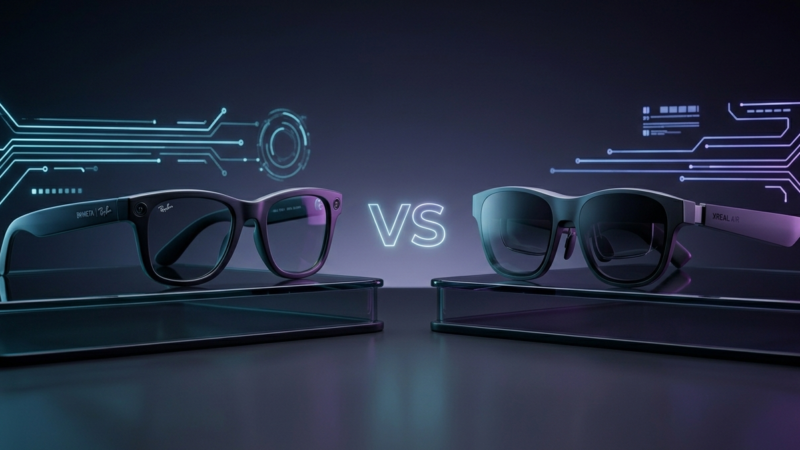
Head-to-Head: Ray-Ban Meta Gen 2 vs XREAL One Pro
These are the two most popular smart glasses in 2026, and the question of which to buy comes up constantly. Here’s the honest breakdown:
Design: Ray-Ban Meta Gen 2 wins by a wide margin. It looks like premium Ray-Ban eyewear. The XREAL One Pro looks like tech hardware — you’ll know you’re wearing something unconventional.
Features: Completely different products. Gen 2 gives you a capable AI assistant, high-quality camera, and social sharing. XREAL One Pro gives you a giant virtual screen with spatial anchoring and Bose audio.
Display: XREAL One Pro wins easily — it has one. Ray-Ban Meta Gen 2 has no display at all.
AI Capabilities: Ray-Ban Meta Gen 2 wins. Deep Meta AI integration with Llama 4, real-time translation, and conversation focus are legitimately useful daily tools. XREAL One Pro has no native AI.
Battery Life: Ray-Ban Meta Gen 2 wins at up to 8 hours standalone. XREAL One Pro has no internal battery.
Price: Both start under $600, but for different things. At $379, the Gen 2 is the better value for daily use. At $599–$699, the One Pro is the better value for media and display purposes.
The Bottom Line: If you want to use AI, buy the Ray-Ban Meta Gen 2. If you want to see things on a big screen, buy the XREAL One Pro. They don’t really compete — they serve completely different use cases.
FAQ: Smart Glasses in 2026
What are smart glasses used for?
Smart glasses serve several distinct purposes in 2026. AI glasses like Ray-Ban Meta provide a hands-free assistant, camera, and audio device — useful for navigation, translation, capturing POV video, making calls, and controlling music without touching your phone. AR display glasses like XREAL One Pro turn into a portable private screen for media, gaming, and remote work. Standalone AR glasses like RayNeo X3 Pro overlay real-world navigation, translation subtitles, and AI responses directly into your field of vision.
Are smart glasses worth buying in 2026?
For most people, yes — with an asterisk. The Ray-Ban Meta Gen 2 in particular has reached a level of usability and style where it’s genuinely worth buying for the right person: someone who uses an AI assistant frequently and wants to go hands-free. AR display glasses are worth it for frequent travelers and commuters. Standalone true AR glasses are still niche and expensive, but the RayNeo X3 Pro is the most compelling value proposition in that space.
Do smart glasses work with smartphones?
All major smart glasses in 2026 work with smartphones. AI glasses (Ray-Ban Meta, Rokid) pair with both iOS and Android via companion apps. XREAL display glasses require a USB-C connection for video output — compatible with iPhone 15 and 16 directly, and most modern Android phones with DP Alt Mode support. Standalone glasses like RayNeo X3 Pro connect wirelessly to any smartphone.
Which smart glasses have the best AR display?
For pure visual quality in a wearable display, the XREAL One Pro leads the market in 2026 with a 57° field of view, 700 nits brightness, 1080p resolution, and 120Hz refresh rate powered by Bose audio. For true AR (overlaying digital info on the real world), the RayNeo X3 Pro’s waveguide display is the most technologically advanced option accessible to consumers.
Are smart glasses the future of wearable tech?
All evidence points toward yes. The category has grown from novelty gadgets to genuine daily-use tools in just two years. The arrival of Meta Ray-Ban Display glasses, Google’s Android XR platform, and XREAL’s spatial computing ecosystem in 2025–2026 suggests we’re at an inflection point. Apple’s rumored entry into the space — widely anticipated for late 2026 or 2027 — could be the moment smart glasses go truly mainstream, much like the Apple Watch normalized smartwatches in 2015.
The Future of Smart Glasses
AI Assistants Becoming Wearable-First
Meta’s integration of Llama 4 into Ray-Ban Gen 2 and RayNeo’s Gemini AI represent a shift in how we interact with AI. By the end of 2026, these assistants will understand visual context, your location, your calendar, and your preferences — all without pulling out your phone. The glasses are becoming the primary access point for AI, not a phone accessory.
Android XR: Google Enters the Arena
One of the most significant developments for 2026 is the arrival of the first Android XR-powered smart glasses, led by XREAL’s Project Aura. These glasses will boast a 70-degree field of view and run the full Android ecosystem — including every Android app — directly from the glasses. Samsung is also launching Android XR glasses under the Gentle Monster and Warby Parker brands. This creates a viable competitor to Meta’s platform for the first time.
AR Productivity: Replacing the Monitor
Spatial computing is quietly becoming a real productivity tool. XREAL’s virtual multi-monitor workspace — used by journalists and remote workers on planes and in cafes — is a preview of where knowledge work is heading. As resolution and field of view improve, the question of whether you need a physical desk at all becomes more interesting.
The Apple Factor
The smart glasses market is functioning in a state of suspended anticipation for Apple’s entry. Apple Glass — or whatever Apple calls it — has been rumored for years. In early 2026, reports suggested Apple’s AR glasses could feature a microLED display with capabilities beyond any current competitor. Apple entering this space would do for smart glasses what the iPhone did for smartphones: set a new standard for both hardware and user experience. That moment may be closer than ever.
Smart Glasses Replacing Smartphones?
Not yet — but the direction is clear. Meta’s Orion prototype (not yet consumer-available) pointed toward a future where a single pair of glasses handles everything a phone does. For 2026, smart glasses are companions to your phone, not replacements. By 2028–2030, that calculation may look very different.
Final Verdict: Which Smart Glasses Should You Buy in 2026?
The smart glasses market in 2026 rewards buyers who know exactly what they want. Here are our recommendations by user type:
Best overall for most people: Ray-Ban Meta Gen 2 (~$379) The accessible entry point into AI smart glasses. Looks great, works great, ships with the best AI assistant in the category. If you’re buying your first pair of smart glasses, start here.
Best AR display glasses: XREAL One Pro (~$599–$699) Nothing beats it for visual immersion, spatial audio, and device compatibility. The definitive choice for media lovers, travelers, and anyone building a portable workspace.
Best value AR display: XREAL 1S (~$449) The sweet spot between price and performance for AR display glasses. Virtually matches the One Pro’s visual quality at a lower price.
Best standalone AR glasses: RayNeo X3 Pro (~$499–$599) For those who want real, wire-free augmented reality with a capable AI onboard. The most technologically ambitious consumer AR device you can actually buy today.
Best budget AI glasses: Rokid AI Glasses (~$299–$349) If you want AI on your face without spending $400+, Rokid delivers a strong ChatGPT-5 experience in the lightest frame in the market.
Wait and see: Apple Smart Glasses If you’re deep in the Apple ecosystem and can wait, the rumored Apple smart glasses could be the most compelling device in this list by the time they launch. No guarantees on timeline, but if Apple delivers, it will likely set the new benchmark.
Smart glasses in 2026 are no longer just for early adopters. They’re here, they’re useful, and for the right person, they’ll change how you move through the world.
More from TekX.io: