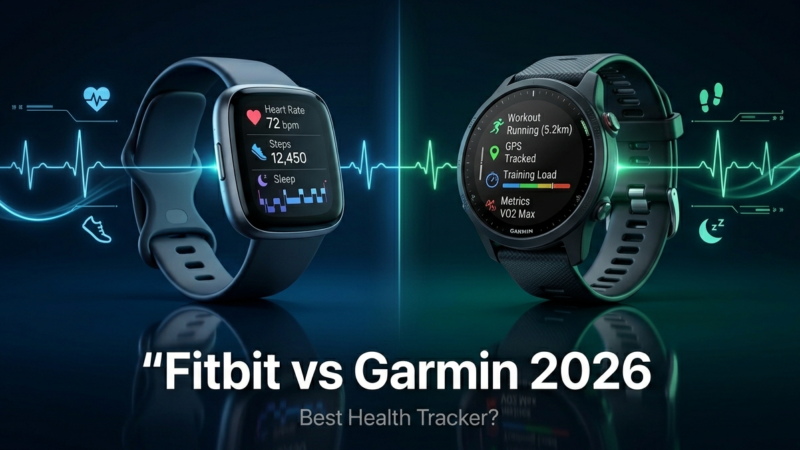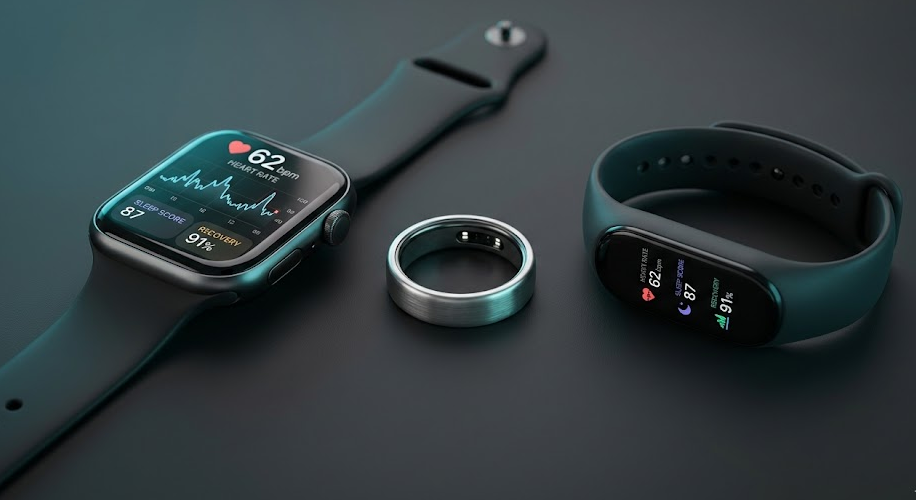
Introduction
Something quietly remarkable has happened in healthcare over the past few years: millions of people are now wearing their doctor’s office on their wrist — or finger. Wearable health monitors have evolved from basic step counters into sophisticated biometric platforms capable of tracking heart rate variability, blood oxygen saturation, sleep architecture, skin temperature, and even early signs of illness. In 2026, they’re no longer a novelty for fitness fanatics. They’re a legitimate tool for anyone serious about understanding their body.
The global wearable health technology market is booming, and the devices available today reflect a maturity the category only recently reached. Whether you’re managing a chronic condition, training for a marathon, trying to sleep better, or simply curious about your baseline health metrics, there’s a wearable built precisely for your needs.
In this guide, we break down the best wearable health monitors of 2026 — covering smartwatches, smart rings, and dedicated fitness trackers — so you can cut through the marketing noise and find the device that actually makes sense for your lifestyle.
Quick Comparison: Best Wearable Health Monitors at a Glance
| Device | Best For | Key Health Features | Battery Life | Price Range |
|---|---|---|---|---|
| Apple Watch Series 10 | All-around health + iPhone users | ECG, SpO2, sleep, skin temp, crash detection | ~18 hrs | $399–$499 |
| Garmin Venu 3 | Fitness + multi-day battery | HRV, Body Battery, sleep, SpO2, stress | 14 days | $449–$499 |
| Oura Ring 4 | Sleep & passive recovery tracking | Sleep stages, readiness, HRV, skin temp, SpO2 | 5–8 days | $349–$499 |
| Ultrahuman Ring Pro | No-subscription biometrics | Sleep, HRV, movement index, metabolic scores | 5–6 days | $349 |
| Whoop 5.0 | Athlete performance & recovery | Strain score, sleep coach, SpO2, HRV, skin temp | 4–5 days | $199–$359/yr |
| Fitbit Sense 3 | Budget-friendly daily wellness | ECG, SpO2, EDA stress sensor, sleep, temp | 6 days | $199–$249 |
The Best Wearable Health Monitors in 2026
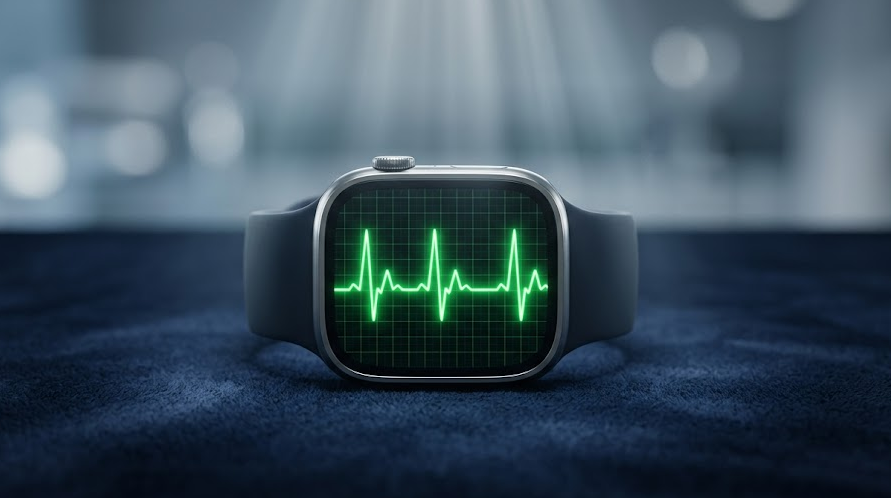
Apple Watch Series 10
The Apple Watch has long been the benchmark against which all other wearable health monitors are measured — and Series 10 does nothing to change that. It’s the most capable all-in-one health wearable on the market, provided you’re in the Apple ecosystem.
Apple continues to push the medical-grade boundary. The Series 10 builds on the ECG app, irregular heart rhythm notifications, and blood oxygen monitoring of its predecessors, while adding improved sleep tracking, crash detection, and a refined skin temperature sensor for menstrual cycle insights and early illness detection.
Key Health Features:
- ECG app with FDA clearance for AFib detection
- Blood oxygen (SpO2) monitoring
- Advanced sleep tracking (REM, core, deep, awake stages)
- Skin temperature sensing for menstrual cycle and illness trend tracking
- Heart rate alerts (high, low, and irregular rhythm)
- Crash detection and fall detection with emergency SOS
Pros:
- Best-in-class health sensor suite for a smartwatch
- Deep integration with Apple Health and third-party health apps
- Constant software improvements via watchOS updates
- Stylish, broad range of finishes and bands
Cons:
- Battery life of around 18 hours demands daily charging
- Only works meaningfully with iPhone
- Premium pricing for the upper models
Best for: iPhone users who want comprehensive health monitoring alongside full smartwatch functionality — notifications, Apple Pay, Siri, streaming music, and more.
Garmin Venu 3
Garmin has quietly built the most reliable health tracking ecosystem in the wearable space, and the Venu 3 is its most balanced offering for everyday health-conscious users. Where Apple focuses on instant accessibility and Samsung on Android integration, Garmin focuses on depth of data and endurance — both its own and yours.
The Venu 3 tracks over 30 sports automatically, delivers up to 14 days of battery life in smartwatch mode, and provides Garmin’s renowned Body Battery energy monitoring that synthesizes HRV, stress, sleep quality, and activity data into a single readiness score.
Key Health Features:
- Continuous heart rate monitoring with HRV tracking
- Body Battery energy monitor
- Advanced sleep tracking with sleep score and coaching
- SpO2 blood oxygen monitoring
- Stress tracking with breathing exercises
- Nap detection
- Menstrual and pregnancy tracking
- Pulse Ox during sleep
Pros:
- Exceptional battery life — 14 days typical use
- Robust, field-tested health and fitness ecosystem via Garmin Connect
- Accurate GPS for outdoor activities
- Durable build with AMOLED display
Cons:
- Interface takes time to learn
- App is data-rich but can feel overwhelming for new users
- Some advanced features require pairing with a phone
Best for: Outdoor enthusiasts, runners, cyclists, and anyone who doesn’t want to charge their health tracker every night.
Oura Ring 4
The Oura Ring 4 is the gold standard of passive health monitoring. It does something none of the smartwatches on this list can fully replicate: it disappears. You wear it, forget about it, and wake up each morning to a detailed report on your sleep, recovery, and readiness for the day.
The ring format places sensors directly on the finger — an area with dense blood vessels and relatively little movement artifact — which makes heart rate, SpO2, and skin temperature readings exceptionally accurate. The Oura Ring 4 improved on its predecessor with wider sensor coverage, better readiness algorithms, and deeper cardiovascular insights.
Sleep tracking remains its crown jewel. Oura’s sleep staging, breathing regularity detection, and daytime stress monitoring are among the most scientifically validated in the consumer wearable space.
Key Health Features:
- Best-in-class sleep stage tracking (REM, light, deep, awake)
- Readiness Score using HRV, resting heart rate, and sleep data
- Continuous temperature monitoring
- SpO2 and breathing regularity
- Daytime stress detection
- Period prediction and cycle tracking (via Natural Cycles partnership)
- Resilience and cardiovascular age metrics
Pros:
- Exceptionally comfortable for overnight wear
- 5–8 day battery life
- No display distraction; fully passive tracking
- Best sleep tracking accuracy in its category
- Elegant, discreet design in titanium
Cons:
- Requires $5.99/month Oura Membership for full insights
- No GPS or smartwatch features
- Ring sizing requires upfront commitment
Best for: Sleep-focused users, wellness enthusiasts, and anyone who wants passive 24/7 health data without wearing a watch.
Ultrahuman Ring Pro
Ultrahuman entered the smart ring market to challenge Oura directly, and the Ring Pro has earned its place as a genuine alternative — particularly for users who resist recurring subscription fees.
The Ultrahuman Ring Pro offers no mandatory subscription. Everything is included in the hardware purchase price, with the app delivering metabolic and recovery scores, sleep tracking, and a unique “Movement Index” that factors low-intensity activity into your overall health picture. The hardware has matured significantly, with improved sensor accuracy and a more premium fit and finish.
Key Health Features:
- Sleep tracking with sleep debt monitoring
- HRV and resting heart rate
- Movement and activity tracking
- Metabolic scores (linked to the optional CGM ecosystem)
- Skin temperature fluctuations
- SpO2 monitoring
Pros:
- No subscription required — all data is free
- Competitive sleep and recovery accuracy
- Clean, modern app experience
- Optional continuous glucose monitor (CGM) integration for metabolic health enthusiasts
Cons:
- Ongoing patent litigation with Oura creates availability uncertainty in some markets
- Sleep insights not quite as refined as Oura’s
- Smaller community and less third-party app integration
Best for: Budget-conscious users who want smart ring health tracking without paying monthly fees, or biohackers interested in metabolic health.
Whoop 5.0
Whoop doesn’t want to be your fitness tracker. It wants to be your performance coach. The Whoop 5.0 is the most athlete-oriented wearable health monitor on this list — a screenless band designed entirely around the science of training and recovery, not notifications or step counts.
The core concept is simple: every day, Whoop assigns you a Recovery Score (0–100%) based on your HRV, resting heart rate, respiratory rate, and sleep performance. It then tracks how much strain you’ve accumulated and tells you how close you are to your recovery limit. The result is one of the most actionable health monitoring experiences available, especially for those doing structured training.
The 5.0 upgrade introduced improved health metrics, longer battery life, and enhanced strain detection. A newer WHOOP MG tier adds medical-grade features including continuous ECG and non-invasive blood pressure estimation.
Key Health Features:
- Daily Recovery Score (HRV, resting HR, sleep, respiratory rate)
- Strain tracking across all activities
- Sleep performance with sleep debt and coaching
- SpO2 continuous monitoring
- Skin temperature deviation tracking
- Strength trainer set/rep detection
- WHOOP MG: continuous ECG, AFib detection, blood pressure (top tier)
Pros:
- Most comprehensive recovery and strain analysis available
- Can be worn on wrist, bicep, or in Whoop-designed apparel
- Strong scientific methodology behind metrics
- Regular software-driven insights and health coaching
Cons:
- Subscription-only model ($199–$359/year) — no one-time purchase option
- No screen, no GPS — requires paired smartphone for most functions
- Can feel overkill for casual users
Best for: Serious athletes, endurance sports competitors, and anyone who wants to optimize training load and recovery science.
Fitbit Sense 3
Fitbit’s Sense line has always occupied an interesting niche: medical-adjacent health features at a more accessible price point. The Sense 3 continues this tradition with an ECG app, an EDA (electrodermal activity) stress sensor, SpO2 monitoring, and sleep tracking — features that would cost significantly more on an Apple Watch or Garmin.
Google’s ownership of Fitbit has brought tighter integration with Android, Google Assistant, and Google Wallet. For users who don’t need the depth of Garmin or the ecosystem depth of Apple, the Sense 3 offers a genuinely compelling value proposition.
Key Health Features:
- ECG app for AFib assessment
- EDA (electrodermal activity) sensor for stress tracking
- SpO2 blood oxygen monitoring
- Advanced sleep tracking with Sleep Profile analysis
- Skin temperature tracking
- Heart rate zones and cardio fitness score
- 6-minute walk test for cardiovascular health
Pros:
- Best value ECG-equipped wearable health monitor
- 6-day battery life
- Strong sleep analysis with Fitbit Premium coaching (optional)
- Built-in GPS for outdoor workouts
Cons:
- Full health insights require Fitbit Premium subscription (~$10/month)
- Less advanced ecosystem than Garmin or Apple
- Thicker form factor than some competitors
Best for: Budget-conscious health trackers, Android users, and anyone who wants ECG and stress monitoring without spending $400+.
Types of Wearable Health Monitors
Understanding the categories helps you match a device to your lifestyle before getting bogged down in spec comparisons.
Smartwatches with Health Tracking
The most versatile category. Devices like the Apple Watch Series 10 and Garmin Venu 3 combine comprehensive health monitoring with everyday smartwatch utility — notifications, payments, navigation, and apps. The trade-off is battery life (typically 1–14 days depending on the platform) and form factor (they’re visible and bulkier than other options).
Smart Rings for Health Monitoring
The fastest-growing category in wearables. Devices like the Oura Ring 4 and Ultrahuman Ring Pro deliver passive, continuous health data from the finger — where measurements can be particularly accurate — with zero screen distraction and 5–8 day battery life. Smart rings sacrifice GPS and smartwatch features for comfort, discretion, and sleep-tracking accuracy.
Fitness Trackers
A middle ground between rings and full smartwatches. Devices like the Fitbit Sense 3 and Whoop 5.0 prioritize health and fitness data over traditional smartwatch features, typically offering better battery life and more focused health insights than full smartwatches at lower price points.
Medical-Grade Wearable Sensors
An emerging category that includes devices cleared by the FDA for specific clinical purposes — such as detecting AFib, measuring blood pressure, or continuous glucose monitoring. The Apple Watch ECG, Withings ScanWatch, and WHOOP MG’s continuous ECG represent the consumer end of this spectrum. As regulatory frameworks evolve, expect more clinical-grade capabilities to appear in mainstream devices.
Health Features to Look For
Heart Rate Monitoring
The baseline feature of every wearable health monitor. Modern devices use photoplethysmography (PPG) sensors on the skin to measure blood flow, translating that into heart rate and heart rate variability (HRV). HRV in particular is a powerful indicator of recovery, stress, and overall autonomic nervous system function.
ECG Monitoring
Electrocardiogram capability allows a wearable to record the electrical activity of your heart and screen for conditions like atrial fibrillation (AFib). Available on the Apple Watch, Fitbit Sense 3, Garmin’s premium models, and WHOOP MG, ECG is one of the most clinically validated features in consumer wearables.
Blood Oxygen (SpO2) Monitoring
SpO2 sensors measure the oxygen saturation of your blood, typically during sleep. Low readings can indicate sleep apnea, respiratory issues, or altitude-related changes. Most premium wearables now include SpO2 monitoring, though accuracy varies between devices and conditions.
Sleep Tracking
Sleep tracking has evolved dramatically. Modern wearables can identify REM, light, and deep sleep stages; measure sleep regularity, timing, and duration; detect breathing disruptions that may indicate sleep apnea; and generate actionable coaching based on your patterns. The Oura Ring 4 and WHOOP 5.0 lead the category in sleep analysis depth.
Stress Monitoring
Stress tracking typically combines HRV data, skin conductance (EDA sensors, as in Fitbit Sense 3), and heart rate patterns to estimate your stress level throughout the day. This data, combined with guided breathing exercises, can help users build stress awareness and improve recovery habits.
Recovery Tracking
Recovery scores synthesize multiple biomarkers — resting heart rate, HRV, sleep quality, skin temperature, and previous activity load — into a single daily readiness number. Garmin’s Body Battery and Whoop’s Recovery Score are the most refined implementations of this concept in 2026.
Temperature Sensing
Skin temperature sensors detect subtle daily fluctuations linked to illness, ovulation, stress, and jet lag. Many devices now use multi-night temperature baselines to flag deviations that may indicate you’re getting sick before symptoms appear.
Best Wearable Health Devices by Category
Best Wearable Health Tracker for Sleep Monitoring
Winner: Oura Ring 4 No device on the market matches the Oura Ring 4’s combination of sleep tracking accuracy, comfort for overnight wear, and actionable insights. Its finger-placement sensors reduce motion artifact, its battery lasts nearly a week, and its sleep stage analysis is backed by more independent clinical research than any competing consumer device.
Best Wearable for Heart Health Tracking
Winner: Apple Watch Series 10 ECG, irregular rhythm notifications, AFib history, and heart rate alerts make the Apple Watch the most comprehensive heart health monitor in a consumer wearable. For users who want to stay connected to their cardiovascular health and maintain access to clinical-grade data, no smartwatch competes.
Best Wearable for Athletes and Recovery Tracking
Winner: Whoop 5.0 Serious athletes need more than step counts and sleep scores. Whoop’s daily Recovery Score, Strain Coach, and detailed sleep performance metrics are built around the physiology of performance. Its wear-anywhere hardware means it stays on during contact sports, heavy lifting, and open water swims where other devices come off.
Best Wearable for Overall Health Monitoring
Winner: Garmin Venu 3 The Garmin Venu 3 strikes the best balance between health depth, battery life, GPS accuracy, and long-term reliability. Its Body Battery feature, advanced sleep insights, stress tracking, and 14-day battery make it a true daily health companion without the anxiety of daily charging.
Best Budget Wearable Health Device
Winner: Fitbit Sense 3 At $199–$249, the Fitbit Sense 3 delivers ECG, SpO2, EDA stress monitoring, skin temperature sensing, and sleep tracking at a price point that’s roughly half the cost of comparable Apple or Garmin hardware. For first-time health wearable buyers, it’s an exceptional starting point.
Oura Ring 4 vs Ultrahuman Ring Pro: Head-to-Head
Two of the best smart rings on the market, both targeting the same passive monitoring niche. Here’s how they compare across the metrics that matter most.
| Category | Oura Ring 4 | Ultrahuman Ring Pro |
|---|---|---|
| Design | Premium titanium; 8 colorways; sleek profile | Matte finish titanium; minimalist aesthetic |
| Sleep Tracking Accuracy | Best-in-class; gold standard among rings | Strong; slightly less granular stage data |
| Battery Life | 5–8 days | 5–6 days |
| Health Metrics | Sleep, HRV, SpO2, temp, readiness, cycle tracking | Sleep, HRV, SpO2, temp, movement index |
| App Quality | Polished, intuitive, regularly updated | Clean, improving rapidly |
| Subscription Required? | Yes — $5.99/month for full insights | No — all features free |
| Comfort (Long-Term) | Excellent; smooth inner surface | Good; inner sensors slightly more prominent |
| Unique Advantage | Natural Cycles partnership; cardiovascular age | CGM integration; no subscription cost |
| Price | $349–$499 + subscription | $349 (one-time) |
Bottom line: If you want the most refined sleep and health insights and don’t mind a modest monthly fee, Oura Ring 4 is the clear winner. If you want similar data without an ongoing cost — and you’re interested in metabolic health — Ultrahuman Ring Pro is the smarter buy.
FAQ: Wearable Health Monitors
What is a wearable health monitor?
A wearable health monitor is a sensor-equipped device — typically a smartwatch, fitness band, or smart ring — worn on the body to continuously measure and track health metrics such as heart rate, blood oxygen, sleep stages, skin temperature, stress levels, and physical activity. Data is typically synced to a companion smartphone app and presented as trends, scores, and actionable health insights.
Are wearable health devices accurate?
Accuracy varies by device, metric, and individual. For heart rate monitoring, leading devices are generally accurate to within a few beats per minute under normal conditions. SpO2 readings and ECG outputs from FDA-cleared devices like Apple Watch and Fitbit Sense 3 meet defined clinical thresholds for screening purposes. Sleep stage tracking is improving rapidly, though it remains an estimate compared to clinical polysomnography. For general health trend monitoring — rather than clinical diagnosis — the leading wearable health monitors of 2026 are meaningfully accurate.
Which wearable tracks health the best?
There’s no single answer, because “best” depends on your primary health focus. For sleep: Oura Ring 4. For heart health: Apple Watch Series 10. For athletic recovery: Whoop 5.0. For all-around daily health: Garmin Venu 3. The best wearable health monitor is the one that tracks the metrics most relevant to your goals.
Can wearables detect health problems?
Some can, in specific contexts. Apple Watch and Fitbit Sense 3 have FDA clearance to screen for atrial fibrillation via their ECG features. Multiple devices can flag elevated resting heart rate or irregular rhythms that may warrant medical attention. Temperature sensors can indicate illness onset days before symptoms appear. However, consumer wearables are designed for wellness monitoring and screening, not clinical diagnosis. Always follow up anomalies with a healthcare professional.
Are smart rings better than smartwatches for health tracking?
It depends on what you’re tracking. Smart rings like the Oura Ring 4 often outperform smartwatches for sleep tracking and passive overnight monitoring, because they’re more comfortable to wear continuously and their finger-mounted sensors can be more accurate for HRV and resting heart rate. Smartwatches, however, offer GPS, ECG, real-time notifications, and a broader feature set. For someone who wants serious sleep and recovery data without smartwatch clutter, a ring may be the better choice. For an all-in-one health and lifestyle device, a smartwatch wins.
The Future of Wearable Health Technology
The wearables we use today are impressive. What’s coming in the next three to five years is genuinely transformative.
AI-Powered Health Monitoring
AI is no longer just powering better sleep scores. In 2026, devices like Whoop and Garmin use machine learning to correlate journal entries, lifestyle habits, and biometric trends to deliver personalized coaching that improves with every data point. The next generation will detect health deterioration — cardiac, metabolic, neurological — weeks before symptoms manifest.
Continuous Glucose Monitoring (CGM) Wearables
Non-invasive continuous glucose monitoring is one of the most anticipated developments in consumer health technology. Ultrahuman already integrates with external CGM patches. Multiple major manufacturers are racing to embed optical glucose sensing directly into smartwatch hardware. When it arrives at scale, it will open real-time metabolic health data to millions of people without diabetes.
Non-Invasive Health Sensors
Beyond glucose, researchers are developing wearable sensors capable of tracking lactate levels, cortisol, hydration status, and even early cancer biomarkers through sweat, skin conductance, and optical spectroscopy. Samsung and Withings have both publicly committed to blood pressure monitoring through wrist-based sensors — a feature already cleared in several international markets.
Predictive Health Analytics
The most profound shift in wearable health technology won’t be in the sensors — it’ll be in what we do with the data they generate. Health platforms are beginning to build longitudinal models of individual health baselines, using years of biometric data to predict cardiovascular events, metabolic disorders, and mental health deterioration before clinical markers appear. The wearable of 2028 may not just tell you how you slept — it may tell you that your body is showing early signs of burnout six weeks before you feel it.
Final Verdict: Which Wearable Health Monitor Should You Buy?
The best wearable health monitor in 2026 is a device you’ll actually wear consistently. Every device on this list loses its value the moment it sits in a drawer.
Here’s how to choose:
- You want the best all-around health wearable and use an iPhone: → Apple Watch Series 10
- You want depth of fitness and health data with exceptional battery life: → Garmin Venu 3
- Sleep quality is your primary concern: → Oura Ring 4
- You want smart ring tracking without a subscription: → Ultrahuman Ring Pro
- You’re a serious athlete optimizing training and recovery: → Whoop 5.0
- You’re new to health wearables and want to start smart without overspending: → Fitbit Sense 3
Wearable health technology has reached a turning point in 2026. These aren’t toys or novelties — they’re serious health tools that surface insights your doctor won’t see in an annual check-up. The right one, worn consistently, genuinely changes how you understand your own body.
More from TekX.io:
- Oura Ring 4 Review Canada 2026: Is It Worth the Price?
- Ultrahuman Ring PRO Review 2026: 15-Day Battery, No Subscription, and the Best Smart Ring You Can Buy Right Now
- Ultrahuman Ring Pro vs Oura Ring 4: Which Smart Ring Is Actually Worth Your Money in 2026?
- Fitbit vs Garmin for Health Tracking in 2026: Which Wearable Actually Wins?