Introduction
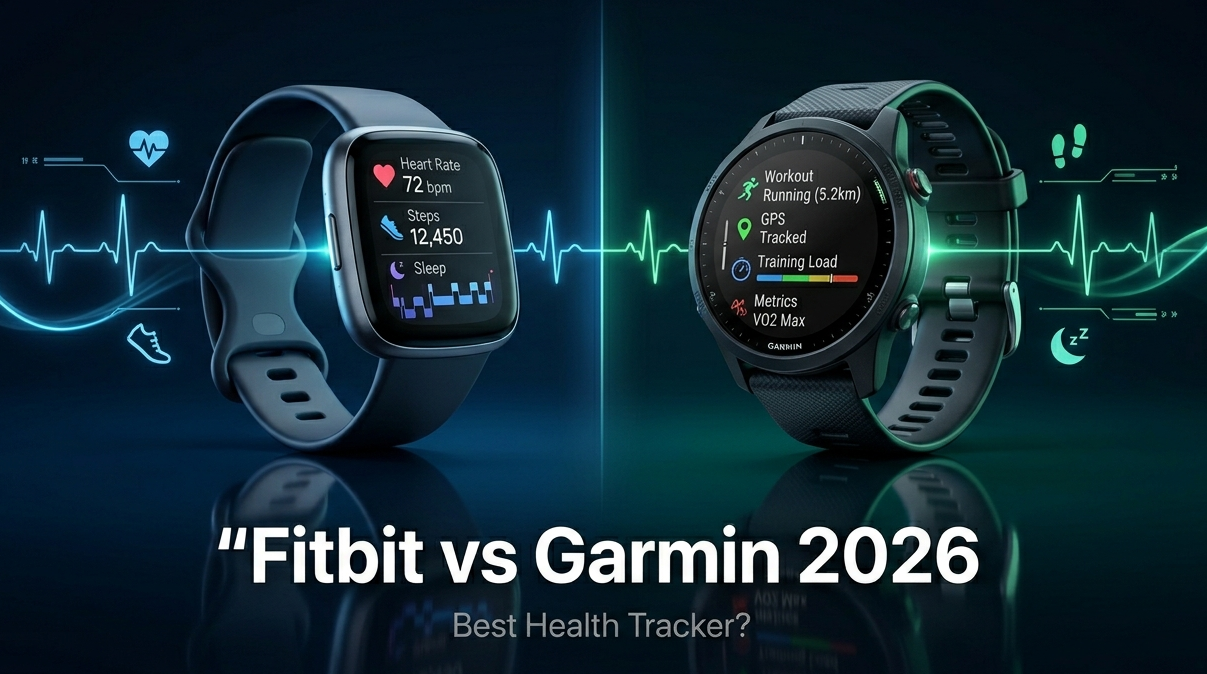
Few debates in the wearable tech world run as deep as Fitbit vs Garmin. Both brands have spent years earning their place on millions of wrists — and for very different reasons. Fitbit built its name by making health data feel approachable and intuitive, turning complex biometrics into simple daily snapshots. Garmin, on the other hand, carved out its reputation among athletes and outdoor adventurers who want granular performance data and ironclad durability.
In 2026, the gap between the two has narrowed in some areas — and widened in others. Fitbit, now firmly under Google’s umbrella, has deepened its health monitoring features while maintaining its beginner-friendly appeal. Garmin, meanwhile, has expanded its wellness tools significantly, though its core identity remains sports and performance-first.
So which one deserves a spot on your wrist? That depends almost entirely on what you want from a wearable. This guide breaks down every major category — health tracking, fitness features, sleep monitoring, battery life, app experience, and price — so you can make the right call.
Quick Comparison: Fitbit vs Garmin at a Glance
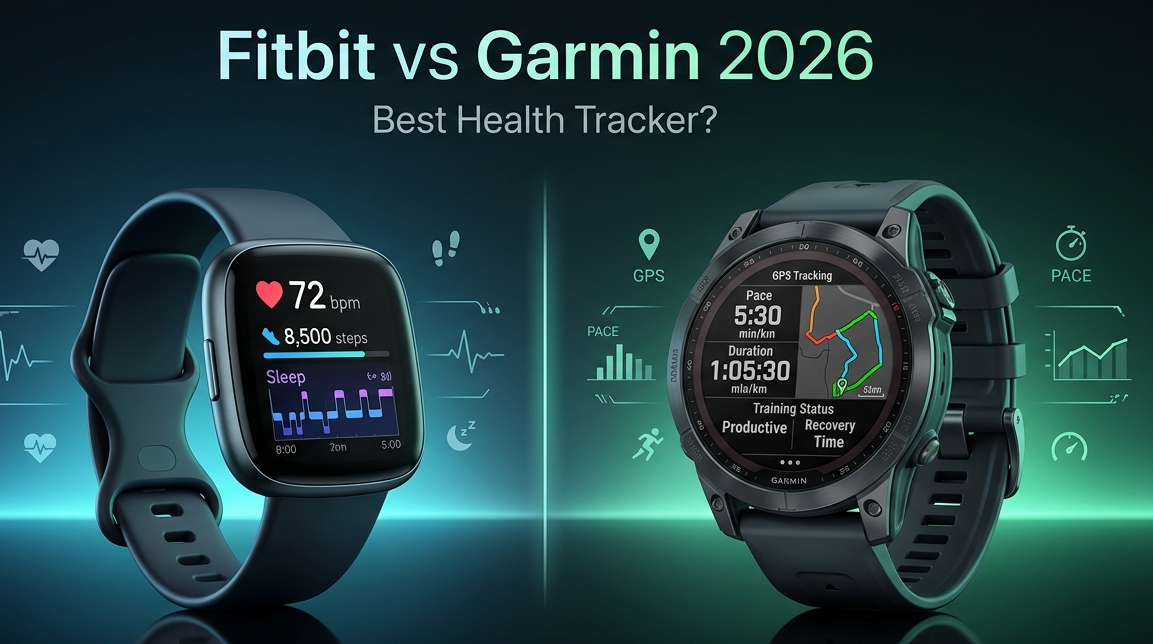
| Feature | Fitbit Devices | Garmin Devices |
|---|---|---|
| Health Tracking Focus | Wellness, daily health metrics | Sports performance + wellness |
| Heart Rate Monitoring | Continuous, beginner-friendly display | Continuous, highly accurate |
| Sleep Tracking | Industry-leading accuracy | Improved; still lags Fitbit slightly |
| Blood Oxygen (SpO2) | Yes (select models) | Yes (most models) |
| Stress Tracking | EDA sensor + app stress tools | Body Battery + HRV stress score |
| ECG Monitoring | Yes (Charge 5, Charge 6, Sense 2) | Yes (Venu 3, Fenix 8, Epix Pro) |
| GPS | Built-in (select models) | Built-in (most models) |
| Battery Life | 2–10 days | 7–37+ days |
| Sports Profiles | 20–40 modes | 90–150+ modes |
| App Experience | Intuitive; subscription for advanced data | Free advanced data; steeper learning curve |
| Price Range | $70–$300 | $150–$1,000+ |
| Best For | Casual users, health-focused individuals | Athletes, outdoor enthusiasts |
Fitbit Overview: Health Tracking Made Simple
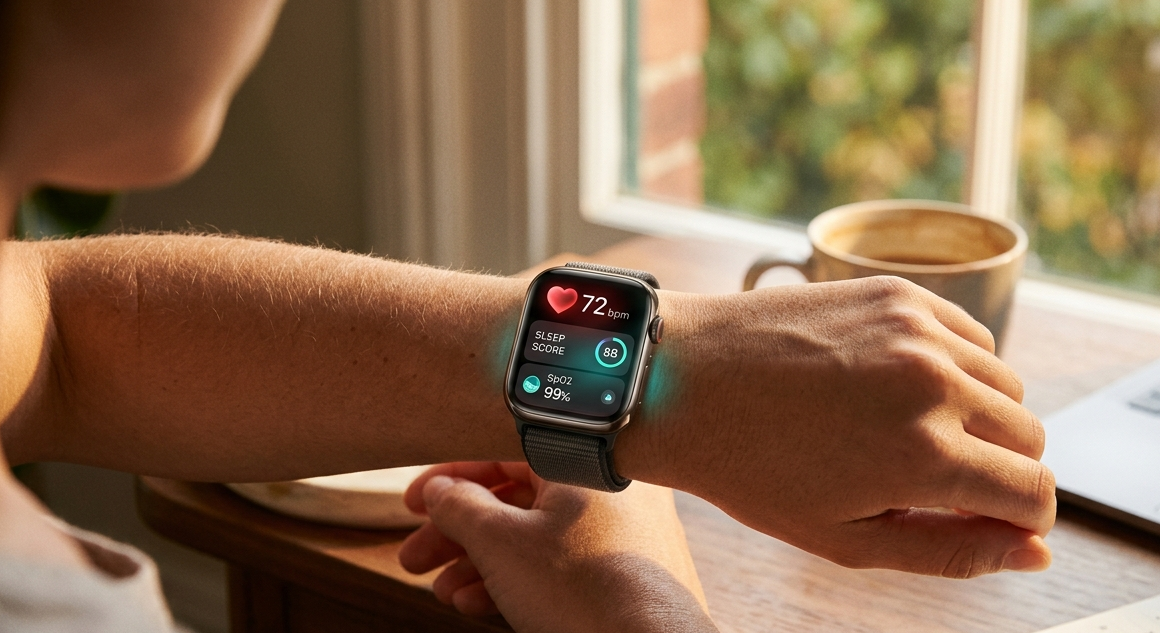
Fitbit launched in 2007 as a humble step counter, but today’s lineup represents something far more sophisticated. Under Google ownership, the brand has evolved into a genuine health monitoring platform with tools that were once reserved for clinical settings.
Popular Fitbit Devices in 2026
- Fitbit Charge 6 — The sweet spot for most users. Built-in GPS, ECG, EDA stress sensor, and Google integrations (Maps, Wallet) in a slim band form factor.
- Fitbit Sense 2 — Fitbit’s premium smartwatch with full health sensor suite including skin temperature tracking.
- Fitbit Inspire 3 — The entry-level pick, lightweight and straightforward, with up to 10 days of battery life.
- Pixel Watch 3 — The Google-Fitbit fusion at the high end, pairing Wear OS with Fitbit’s health tracking engine.
Fitbit Health Features
Fitbit’s Health Metrics Dashboard is one of its standout offerings — and it’s now free to all users. It pulls together resting heart rate, skin temperature, blood oxygen (SpO2), and heart rate variability (HRV) from a single night’s sleep into one clear view. Think of it as a daily health check-in that doesn’t require a medical degree to interpret.
Stress tracking is another area where Fitbit holds a real edge. Select models use an electrodermal activity (EDA) sensor that physically detects your body’s stress response through skin conductance — not just an algorithm estimating tension from your heart rate. Pair that with in-app mindfulness sessions and you get a wellness loop that actually helps you act on the data, not just collect it.
✅ Fitbit Pros
- Exceptionally intuitive app — great for beginners
- Best-in-class sleep tracking accuracy
- Health Metrics Dashboard now free
- EDA sensor for real-time stress detection
- Affordable entry-level options
- Afib and sleep apnea detection on supported models
❌ Fitbit Cons
- Best features locked behind Fitbit Premium ($9.99/month)
- Shorter battery life compared to Garmin
- Fewer sport profiles than Garmin
- No safety features (no fall detection, no incident alerts)
- Garmin typically more accurate for athletic metrics
👤 Best For
Casual fitness users, people new to wearables, health-conscious individuals prioritizing wellness over athletic performance, and anyone who wants actionable health data without a steep learning curve.
Garmin Overview: Built for Performance, Now Tracking Wellness Too
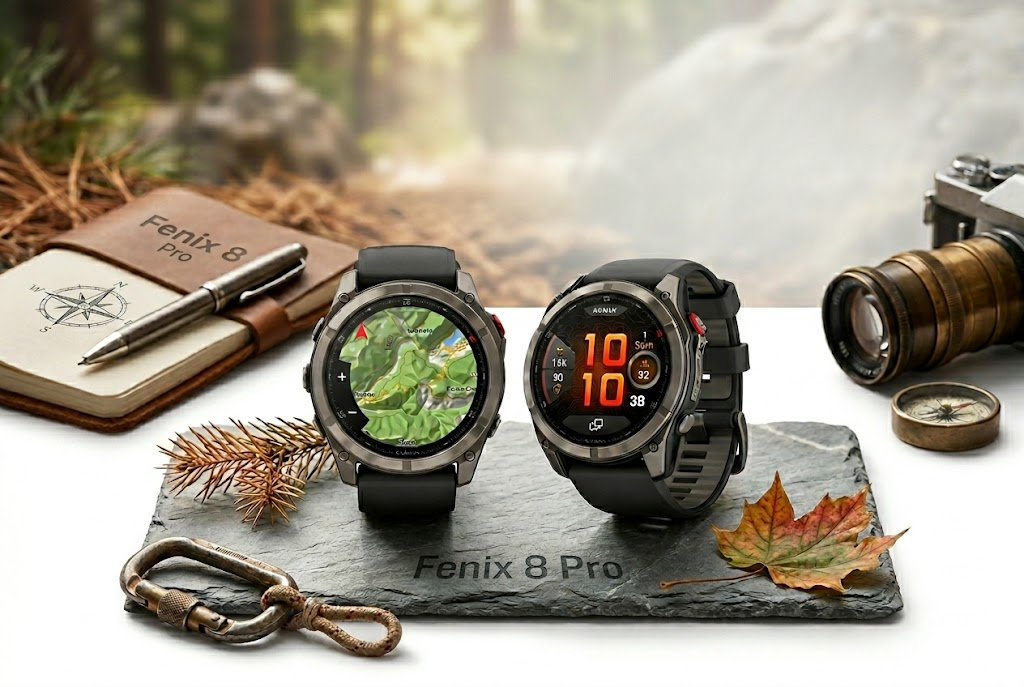
Garmin began as a GPS navigation company — and that heritage still runs through everything it builds. Its watches are engineered for accuracy in the outdoors, durability in tough conditions, and depth of athletic data that no other wearable brand can fully match.
Popular Garmin Devices in 2026
- Garmin Venu 3 — Garmin’s most wellness-focused smartwatch. AMOLED display, sleep coaching, nap detection, wheelchair mode, and ECG support.
- Garmin Forerunner 265 / 965 — The runner’s best friend. Multi-band GPS, detailed training load metrics, and race predictor tools.
- Garmin Fenix 8 — The flagship adventure watch. Multi-sport, multi-day battery, diving support, topographic maps, and solar charging.
- Garmin Vivoactive 6 — A versatile mid-range option blending fitness tracking and smartwatch features at an accessible price.
- Garmin Instinct 3 — Built like a tank. MIL-STD-810 rated with solar charging and navigation-grade GPS.
Garmin Health Features
Garmin’s Body Battery is a surprisingly useful concept — a 0–100 energy score derived from HRV, sleep quality, stress levels, and activity. It helps you understand not just how much you’ve done, but how much your body has left in the tank. For anyone managing training load or recovering from illness, it’s a genuinely practical tool.
Training Readiness — available on mid-to-high range models — takes this further by combining sleep data, recovery time, HRV status, and recent training load into a single score that advises whether you should push hard or pull back. Crucially, this feature is completely free in Garmin Connect, whereas Fitbit charges a premium subscription for similar insights.
Garmin has also added nap tracking and significantly improved its sleep staging accuracy in recent firmware updates, narrowing (though not fully closing) the gap with Fitbit in that department.
✅ Garmin Pros
- Exceptional GPS accuracy across all price tiers
- Advanced training and recovery metrics (free in Garmin Connect)
- Outstanding battery life — some models last weeks
- 90+ sport profiles with rich activity data
- Safety features: LiveTrack and Incident Detection
- Broader device range with more options at every price point
- Dexcom integration for diabetics
❌ Garmin Cons
- App has a steeper learning curve
- Bulkier design on sport-focused models
- Sleep tracking still slightly behind Fitbit
- Premium models are expensive
- Wellness data can feel secondary to athletic metrics
👤 Best For
Runners, cyclists, swimmers, hikers, triathletes, and anyone who wants detailed sports performance data alongside solid health monitoring.
Health Tracking Features: Head-to-Head
Heart Rate Monitoring
Both brands offer continuous 24/7 heart rate tracking, but there’s a meaningful difference in how the data is used. Fitbit presents resting heart rate trends in a clean, easy-to-read format on its Health Metrics Dashboard. Garmin’s heart rate data is equally accurate and feeds directly into its training metrics — VO2 max estimates, training effect, and recovery advisor.
For pure heart rate accuracy during exercise, independent testing has consistently found Garmin to be more reliable, particularly during high-intensity intervals where wrist-based optical sensors typically struggle. Fitbit has improved significantly here, especially on the Charge 6 and Pixel Watch 3, but Garmin’s sensor performance at max effort remains the benchmark.
Sleep Tracking
This is Fitbit’s home turf. Fitbit’s sleep tracking is widely regarded as among the most accurate available from a wrist-worn consumer device. It captures light, deep, and REM sleep stages, flags oxygen variation that could indicate sleep apnea symptoms, and integrates sleep biometrics directly into the next morning’s Health Metrics Dashboard.
Garmin has closed the gap considerably — modern Garmin watches track sleep stages, respiration rate, skin temperature, and blood oxygen at night. But testing shows Garmin tends to be slightly generous in estimating total sleep duration and is less sensitive to brief wake-ups than Fitbit. If sleep quality is your primary concern, Fitbit still leads.
Blood Oxygen (SpO2) Monitoring
Both ecosystems support SpO2 tracking, with continuous overnight monitoring available on supported models from both brands. Garmin’s Pulse Ox sensor is available across a broader range of its lineup, while Fitbit offers it on the Charge 5, Charge 6, Sense 2, and Pixel Watch.
Stress Tracking
Fitbit has an edge in how it measures stress. The EDA (electrodermal activity) sensor on the Charge 6 and Sense 2 detects physiological stress responses directly — not just inferred from heart rate. Garmin uses HRV-based stress scoring, which is less direct but still useful, and supplements this with its Body Battery metric and post-workout mood check-ins.
Recovery Tracking
Garmin pulls ahead decisively here. Training Readiness, HRV Status, and detailed load focus tools give Garmin devices a structured, science-backed recovery framework that’s free with any Garmin Connect account. Fitbit’s Daily Readiness Score offers similar guidance, but it’s gated behind the Fitbit Premium paywall.
ECG Monitoring
Both brands support ECG for AFib detection, but availability varies by model. Fitbit offers ECG on the Charge 5, Charge 6, and Sense 2. Garmin brings it to the Venu 3, Fenix 8, and Epix Pro Gen 2. Neither brand has a clear edge here — the feature works comparably across both ecosystems.
Fitness and Workout Tracking
Running: Garmin wins, and it isn’t particularly close. Garmin’s multi-band GPS is among the most accurate available in a consumer wearable. Running dynamics — ground contact time, cadence, stride length, vertical oscillation — are available on mid-range and above Garmin models and give serious runners genuine insights. Fitbit tracks running competently, but without the same analytical depth.
Cycling: Again, Garmin. Power meter connectivity (via ANT+), detailed cycling dynamics, and dedicated cycling computers in the Edge lineup make Garmin the dominant force for cyclists. Fitbit handles casual rides adequately.
Strength Training: Fitbit handles the basics better for most users — rep counting and active zone minutes are easy to track and understand. Garmin has added strength training features, including guided workouts and muscle map tracking on newer models, but the interface is more complex.
Outdoor Sports: Garmin’s advantage here is enormous. Trail navigation, topographic maps, ski resort maps, open water swimming support, kayaking, golf, diving — Garmin supports over 150 activity profiles. If your fitness happens outside and off the beaten path, Garmin is essentially the only serious choice.
Safety Features: Garmin offers LiveTrack for real-time location sharing and Incident Detection that alerts emergency contacts automatically if a fall or incident is detected during a workout. Fitbit currently offers no equivalent safety features.
Battery Life Comparison
Battery life is one of the most significant practical differences between the two brands.
Fitbit devices typically last between 2 and 10 days depending on the model and usage. The Pixel Watch 3 (45mm) manages around 2 days. The Charge 6 gets about 7 days, and the Inspire 3 can stretch to 10 days with light use and always-on display off.
Garmin devices are in a different category entirely. Entry-level models like the Vivoactive 6 last around 11 days. The Forerunner 965 delivers up to 31 hours of GPS tracking and 23 days in smartwatch mode. The Fenix 8 with solar charging can theoretically run indefinitely in good sunlight conditions. Even the Instinct 3 Solar can go weeks between charges.
For users who hate charging their devices or who spend days in the wilderness, Garmin’s battery performance is a decisive advantage. For everyday users who charge nightly alongside their phone, Fitbit’s battery life is perfectly adequate.
App and Ecosystem Comparison
Fitbit App
The Fitbit app is genuinely one of the best-designed health apps available. It’s clean, motivating, and designed to make complex health data feel approachable. The Health Metrics Dashboard gives you a morning health briefing that even non-technical users can interpret immediately.
The social features — challenges, badges, leaderboards with friends — make Fitbit particularly good for users who need external motivation. The app integrates with MyFitnessPal, MapMyRun, Weight Watchers, and other third-party platforms.
The catch is the Fitbit Premium paywall. Several of the most valuable features — detailed sleep analysis, Daily Readiness Score, guided workout programs — are locked behind a $9.99/month or $79.99/year subscription.
Garmin Connect
Garmin Connect is a more powerful platform, but it asks more of the user. The depth of data available is exceptional — training load, VO2 max trends, weekly intensity minutes, sleep scores, and performance condition scores are all available, and all free. There’s no premium subscription gate in front of Garmin’s analytics.
The Connect IQ store adds third-party apps, watch faces, and widgets. Garmin’s ecosystem also integrates with Strava, TrainingPeaks, Spotify, and Apple Health.
The trade-off is complexity. Garmin Connect is denser and less polished than Fitbit’s app, and can feel overwhelming to new users navigating it for the first time.
Price and Value
| Tier | Fitbit Options | Garmin Options |
|---|---|---|
| Budget ($70–$150) | Inspire 3, Inspire HR | Vivofit 4, Vivosmart 5 |
| Mid-Range ($150–$300) | Charge 6, Sense 2 | Forerunner 165, Vivoactive 6 |
| Premium ($300–$500) | Pixel Watch 3 | Venu 3, Forerunner 265/965 |
| High-End ($500+) | — | Fenix 8, Epix Pro, Enduro 3 |
Fitbit generally offers better value at the entry and mid-range tiers — you get strong health tracking features at accessible prices. Garmin’s mid-range models offer exceptional long-term value for fitness users because the advanced analytics are free in the app. At the premium end, Garmin’s lineup has no equivalent from Fitbit and delivers features that no other consumer brand can match.
If you’re paying for Fitbit Premium long-term, factor that ongoing cost into the comparison — over two years, a $150 Charge 6 plus a Premium subscription adds up to nearly $400.
Check the current price of Inspire 3 on Amazon.ca
Check the current price of Vivosmart 5 on Amazon.ca
Check the current price of Venu 3 on Amazon.ca
Check the current price of Fenix 8 on Amazon.ca
Who Should Choose Fitbit?
Fitbit is the right call if you identify with any of the following:
- You’re new to wearables and want a device that gives you useful health data without a learning curve.
- Sleep and wellness tracking are your primary motivations — Fitbit’s sleep analysis remains the best in the business at this price point.
- Daily health monitoring matters more to you than athletic performance — resting heart rate, HRV, temperature, and SpO2 presented in a digestible morning summary.
- You prefer a slim, discreet design and want something that doesn’t look obviously sporty.
- You’re an Android user who wants the Pixel Watch 3’s fusion of Fitbit health features with a premium smartwatch experience.
- Stress management is important to you — the EDA sensor on the Charge 6 and Sense 2 offers a more direct stress measurement than most competitors.
Who Should Choose Garmin?
Garmin is the better choice if:
- You’re a serious runner, cyclist, or triathlete who needs accurate training load management, GPS performance, and sport-specific metrics.
- Battery life matters — you travel frequently, camp, or simply hate charging your watch every day or two.
- Outdoor adventure is your lifestyle — Garmin’s navigation, topographic mapping, and safety features are essential for trail runners, hikers, and mountaineers.
- You want advanced analytics for free — Training Readiness, HRV Status, and performance condition are all included in Garmin Connect at no extra charge.
- You want a device that grows with you — Garmin’s range spans entry-level to professional-grade, and switching models keeps all your historical data in one ecosystem.
- Safety features are non-negotiable — LiveTrack and Incident Detection are only available in the Garmin ecosystem.
FAQ: Fitbit vs Garmin
Is Garmin more accurate than Fitbit?
For athletic tracking — GPS distance, pace, and exercise heart rate — Garmin is generally more accurate, particularly during high-intensity exercise. For everyday health metrics like resting heart rate, HRV, and sleep staging, both brands perform well, with Fitbit having a slight edge in sleep accuracy.
Which is better for sleep tracking: Fitbit or Garmin?
Fitbit leads in sleep tracking accuracy. Its sleep stage detection is more precise, and it’s better at detecting brief wake-ups. Garmin has improved significantly in recent years and now includes nap tracking and overnight SpO2, but Fitbit still holds the edge in this category.
Are Fitbit devices good for athletes?
Fitbit is adequate for casual fitness and general workout logging. However, athletes who need detailed training metrics — running dynamics, advanced VO2 max analysis, structured training plans, or activity profiles for niche sports — will find Fitbit limiting. Garmin is the more capable platform for serious athletic training.
Does Garmin offer better battery life than Fitbit?
Yes, significantly. Garmin devices typically last from 11 days to several weeks depending on the model. Fitbit’s batteries range from about 2 to 10 days. For users who dislike frequent charging, Garmin has a clear advantage.
Do you need a subscription for Fitbit or Garmin?
Fitbit Premium ($9.99/month) unlocks its most valuable features, including Daily Readiness Score and detailed sleep reports. Garmin Connect is completely free — all analytics, training readiness scores, and performance data are included at no additional cost. This is a meaningful advantage for Garmin in the long run.
Which brand has more sport profiles?
Garmin offers 90–150+ activity profiles depending on the model. Fitbit typically offers 20–40 exercise modes. For multi-sport athletes and outdoor enthusiasts, Garmin is the clear winner.
Final Verdict: Fitbit vs Garmin in 2026
Both brands have earned their reputations — and in 2026, both are better than ever. But they serve different masters.
Choose Fitbit if health and wellness monitoring is your primary goal. It’s the more approachable platform, the better sleep tracker, and the smarter pick for users who want actionable daily health insights without drowning in data. The app is genuinely a pleasure to use, and for casual and moderate fitness users, it checks every box.
Choose Garmin if you’re a performance-driven athlete or outdoor enthusiast. The depth of free analytics in Garmin Connect, the multi-week battery life, the unmatched GPS accuracy, and the breadth of sport profiles make Garmin the most capable fitness wearable ecosystem available at any price point. And for users who don’t want to pay a monthly subscription to access the best features their device offers, Garmin’s free platform is a genuine differentiator.
The Fitbit Charge 6 remains the best value health tracker for everyday users. The Garmin Forerunner 265 or Venu 3 is the better call for anyone who trains seriously or spends meaningful time outdoors.
Either way, you’re getting a capable, well-supported wearable. The question is simply which one matches how you live — and what you actually want to know about your body.
More from TekX.io: