Table of Contents
- What Is the Garmin fēnix® 8 Pro?
- What’s New vs. the Standard Fenix 8
- Models & Pricing in CAD
- Design & Build Quality
- Display: AMOLED vs. MicroLED
- LTE & Satellite Connectivity — The Big Story
- inReach Plans & Subscription Costs (CAD)
- Battery Life — Real-World Numbers
- Sports Tracking & Health Monitoring
- Navigation & Maps
- Pros & Cons
- Fenix 8 Pro vs. Fenix 8 vs. Apple Watch Ultra 3 — Comparison Table
- Who Should Buy the Fenix 8 Pro?
- Final Verdict
- Affiliate Disclosure
If you’ve been following the Garmin world, you already know the fēnix line sits at the very top of the brand’s outdoor smartwatch hierarchy. The Garmin fēnix® 8 Pro, launched in September 2025, takes that throne and adds something the Fenix community has been asking for years: built-in LTE and satellite connectivity. No separate inReach device. No phone in your pocket on a remote trail at midnight. Just you, your wrist, and the ability to call for help from anywhere on Earth.
I’ve spent several months digging through real-world testing data, hands-on reviews from professional athletes and hiking guides, and official specs to give you a clear, no-hype picture of whether this watch deserves your hard-earned money. Spoiler: it’s genuinely impressive — but with some caveats you need to know before clicking “Buy.”
What Is the Garmin fēnix® 8 Pro?
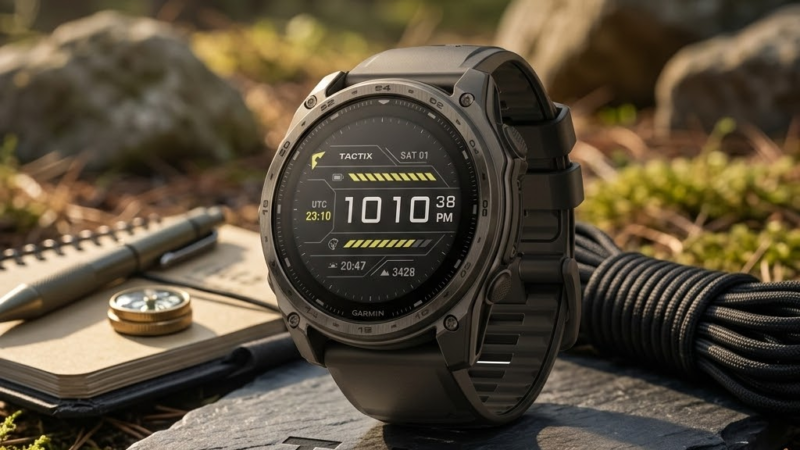
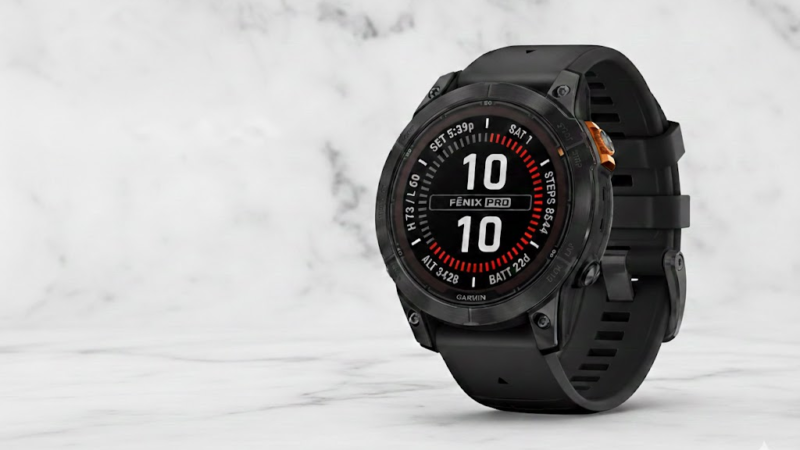
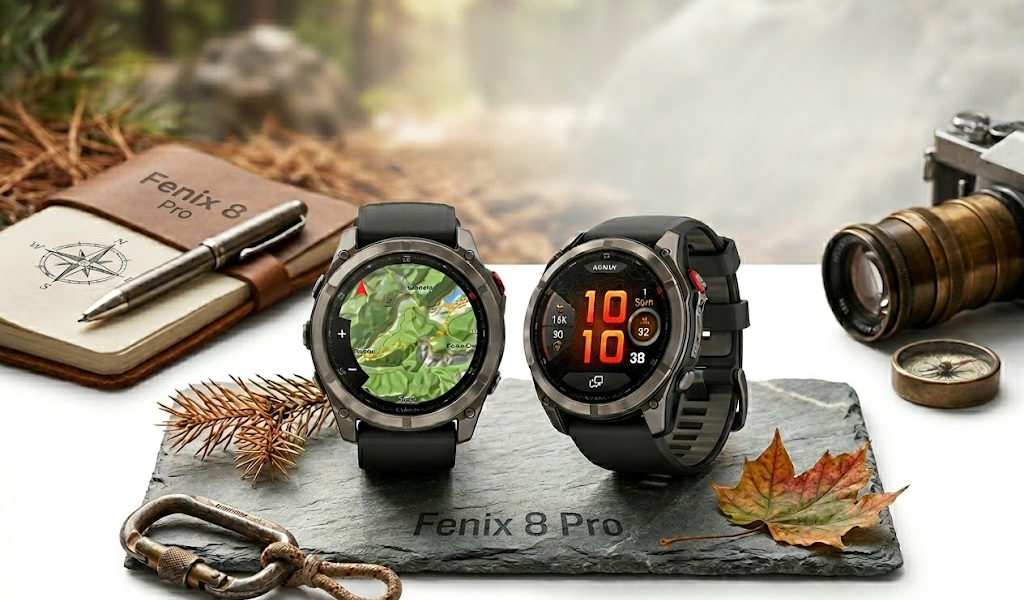
The fēnix® 8 Pro is Garmin’s flagship multisport GPS smartwatch for 2025–2026, designed for serious runners, trail athletes, triathletes, mountaineers, hikers, and anyone who regularly ventures into areas with limited or no cell coverage. It builds directly on the proven foundation of the Fenix 8 — keeping all of its excellent fitness tracking, dive rating, sapphire lens, and titanium build — and adds two headline features: built-in LTE-M cellular and two-way satellite messaging via the Iridium® network.
It’s the first Garmin smartwatch to pack Garmin inReach® technology directly inside the case, replacing the need to clip a separate inReach Mini to your pack. For adventurers and solo athletes, that’s a genuinely big deal.
What’s New vs. the Standard Fenix 8
At its core, the Fenix 8 Pro runs on the same hardware and software platform as the Fenix 8. If you already own a Fenix 8, the day-to-day feel of using the watch — menus, button layout, performance — is virtually identical. The key additions on the Pro are:
- Built-in inReach® satellite messaging — two-way messaging via Iridium® satellite network
- LTE-M cellular connectivity — phone calls, texts, LiveTrack, and check-ins without your phone
- Brighter AMOLED display — up to 2,000 nits vs. 1,000 nits on the standard Fenix 8
- Optional MicroLED display — world’s first wearable MicroLED, with 4,500 nits of brightness (51mm only)
- Louder built-in speaker — needed for LTE voice calls
- Thicker case — approximately 2.2mm thicker to accommodate LTE antenna hardware
- No 43mm size — due to hardware limitations fitting the LTE antenna, only 47mm and 51mm are available
- All-titanium lineup — no stainless steel versions exist on the Pro
It also includes all the new running features Garmin rolled out across the Fenix 8 platform in late 2025, including Running Economy metrics borrowed from the Forerunner 970, step speed loss analysis, and the ability to swipe left on the watch face to access the apps list.
Models & Pricing in CAD
There are three versions of the Fenix 8 Pro available in 2026, all with titanium cases and sapphire lenses. Canadian pricing (approximate CAD, based on USD MSRP and current exchange rates):
| Model | Size | Display | USD MSRP | Est. CAD Price |
|---|---|---|---|---|
| Fenix 8 Pro AMOLED | 47mm | AMOLED (2,000 nits) | $1,199.99 USD | ~$1,649 CAD |
| Fenix 8 Pro AMOLED | 51mm | AMOLED (2,000 nits) | $1,299.99 USD | ~$1,789 CAD |
| Fenix 8 Pro MicroLED | 51mm only | MicroLED (4,500 nits) | $1,999.99 USD | ~$2,749 CAD |
Note: Prices shown are approximate CAD equivalents. Check current pricing on Amazon.ca or Garmin’s Canadian store for the most up-to-date figures. CAD prices can shift with exchange rates.
Check Current Garmin fēnix® 8 Pro Prices on Amazon.ca
Design & Build Quality
The Fenix 8 Pro doesn’t reinvent the wheel visually — and that’s a good thing. The titanium case paired with a sapphire crystal lens has become a trusted formula for Garmin’s flagship line, and it holds up beautifully. Both the 47mm and 51mm versions use DLC titanium (Diamond-Like Carbon coating), which resists scratches better than standard titanium.
One thing to be aware of: the Pro is noticeably thicker than the standard Fenix 8 due to the LTE antenna hardware packed inside. Reviewers consistently note this added bulk. If you wear a watch 24/7 for sleep tracking and prefer a slimmer profile, that’s worth considering. The 51mm version weighs in at 93g with band — not featherlight, but appropriate for a rugged outdoor tool.
The five-button control layout remains, paired with a responsive touchscreen. The QuickFit band system makes swapping to dress or sport bands effortless. The watch is rated to 10 ATM water resistance with a 40-meter dive rating, so it’s more than capable of open water swimming and recreational diving.
Display: AMOLED vs. MicroLED
The display is where the Fenix 8 Pro lineup diverges most dramatically — and the choice matters a lot.
AMOLED (47mm and 51mm)
The standard Pro models use a 1.4″ AMOLED display at 454 x 454 pixel resolution, with a peak brightness of 2,000 nits — double the 1,000 nits of the original Fenix 8. In real-world outdoor use, this is genuinely impressive. Direct sunlight readability is excellent, maps and topo lines are crisp and detailed, and the screen makes a visible difference for navigation in bright conditions.
MicroLED (51mm only)
The MicroLED version is a technological showcase — the world’s first wearable with a MicroLED display, hitting an eye-popping 4,500 nits of brightness. Each pixel has its own independent LED, enabling true blacks and outstanding viewing angles. In pure display terms, it’s ahead of anything on the smartwatch market right now.
The catch is brutal: battery life drops significantly. The MicroLED version is rated for just 10 days in smartwatch mode (vs. 27 days on the AMOLED Pro), and that drops to only 4 days in always-on display mode. For most adventure athletes — the exact audience Garmin is targeting — sacrificing battery life for a brighter screen is a bad trade. Unless you’re spending most of your time in extreme direct sunlight and charging frequently, the AMOLED Pro is the smarter choice for the money.
| Spec | AMOLED Pro | MicroLED Pro |
|---|---|---|
| Display Type | AMOLED | MicroLED |
| Peak Brightness | 2,000 nits | 4,500 nits |
| Smartwatch Battery | Up to 27 days | Up to 10 days |
| Always-On Battery | Up to 14 days | Only 4 days |
| GPS Battery | Up to 57 hrs | Up to 44 hrs |
| Weight (w/ band) | ~82g (51mm) | 93g (51mm) |
| Storage | 16GB | 32GB |
| Est. CAD Price | From ~$1,649 CAD | ~$2,749 CAD |
LTE & Satellite Connectivity — The Big Story
This is what you’re paying the premium for, so let’s be thorough.
How It Works
The Fenix 8 Pro can stay connected in three ways, in priority order:
- Via paired smartphone (Bluetooth) — when your phone is nearby and has data, this is the default path. Everything routes through your phone as normal.
- LTE-M cellular — when you leave your phone at home or go out of Bluetooth range, the watch’s built-in LTE-M antenna takes over. This lets you make and receive voice calls, exchange messages, share your live location with LiveTrack, and send check-ins.
- Satellite (Iridium® NTN) — when you’re truly off-grid with no cellular coverage at all, the watch connects to the Iridium satellite network for two-way messaging and interactive SOS.
What You Can Do Independently (Without Your Phone)
- 📞 Make and receive voice calls over LTE
- 💬 Send and receive text messages over LTE or satellite
- 📍 Share live location with LiveTrack (30-second update rate on LTE)
- 🆘 Trigger interactive SOS to Garmin Response℠ — a staffed 24/7 emergency coordination center — via satellite
- ✅ Send location check-ins to family or friends
- 🌤 Get weather updates
Real-World Performance Notes
Satellite messaging works, but it’s not instant. Messages can take a minute or more to send and receive via satellite — that’s inherent to how satellite networks work, and not a flaw specific to this watch. LTE messaging is much faster and feels close to normal texting.
One limitation worth knowing: the watch doesn’t have its own phone number. Calls and texts route over an IP connection via Garmin’s infrastructure, which means whoever you’re contacting ideally needs the Garmin Messenger app for the best experience. Calling landlines and non-Messenger contacts is technically possible via LTE but may be hit-or-miss depending on network conditions.
Coverage is also not truly global for LTE — it relies on partner carriers in each region. Satellite coverage via Iridium is far more extensive but still has some geographic limitations compared to older dedicated inReach handhelds.
Bottom line on connectivity: For athletes and adventurers who regularly go solo into backcountry areas — and for their families back home — this is a genuinely meaningful safety upgrade. For a city athlete who rarely leaves cell coverage, it’s a feature you might never use.
inReach Plans & Subscription Costs (CAD)
Here’s the part many buyers miss until after purchase: you must have an active Garmin inReach subscription to use any of the LTE or satellite features. Without a plan, the connectivity hardware in the watch is dormant. The plan is entirely separate from any Garmin Connect+ subscription.
As of early 2026, Garmin inReach plans start at approximately $10–$15 CAD/month for the entry tier (Safety plan), scaling up to around $65+ CAD/month for unlimited satellite messaging (Freedom plan). Usage-based costs apply on lower tiers for satellite messages. LTE usage is unlimited across all plan levels — the tiers differ primarily in how many satellite messages are included.
There’s also a one-time device activation fee, which Garmin has waived for the Fenix 8 Pro (a nice touch). You can pause plans seasonally if you only need them part of the year, which helps manage costs for weekend adventurers.
Factor this ongoing subscription cost into your total cost of ownership — for a Safety plan, that’s roughly $120–$180 CAD/year at minimum.
See Fenix 8 Pro options on Amazon.ca
Battery Life — Real-World Numbers
Battery life on the AMOLED Pro versions is strong for a connected smartwatch — though using the LTE or satellite features will eat into it considerably.
| Usage Mode | Fenix 8 Pro 51mm AMOLED |
|---|---|
| Smartwatch mode (no AOD) | Up to 27 days |
| Always-on display (AOD) | Up to 14 days |
| GPS only (no LTE) | Up to 57 hours |
| GPS + Multi-band (no LTE) | Up to 49 hours |
| GPS + Multi-band + LTE LiveTrack | ~15 hours |
| GPS + Multi-band + Satellite messaging | Varies; reduces total GPS runtime significantly |
In practical terms, for a standard day hike or even a multi-day backpacking trip where you’re using GPS and checking in occasionally via satellite, the battery holds up well. For a 50-mile ultramarathon, real-world testers reported finishing with significant battery remaining on the standard GPS mode. The caveat: if you’re running LTE LiveTrack throughout an activity, your GPS window shrinks to roughly 15 hours — fine for most events, but something to plan around for very long efforts.
Sports Tracking & Health Monitoring
The Fenix 8 Pro inherits the full depth of Garmin’s best-in-class sports and health platform. For most activities, it’s as good as it gets in the wearable world:
- Running: Multi-band GPS, running dynamics (cadence, stride length, ground contact time, vertical oscillation), Running Economy, Training Load, VO2 Max, Race Predictor
- Cycling: Power meter compatibility, cycling dynamics, segment alerts
- Triathlon: Full triathlon profile with auto-sport transitions
- Hiking & Trail: TopoActive maps, ClimbPro, round-trip routing, elevation tracking
- Swimming: Open water and pool tracking, SWOLF score, 40m dive rating
- Strength Training: Auto rep counting, guided workouts, muscle group tracking
- Skiing & Snow Sports: Ski maps, auto-run detection
- Health Monitoring: 24/7 heart rate, Pulse Ox (SpO2), HRV Status, Body Battery, stress tracking, sleep staging, respiration rate, menstrual cycle tracking
The new Running Economy metric — measuring your efficiency across different paces — is a particularly useful addition for runners serious about performance optimization. Combined with Training Load, Recovery Advisor, and Training Readiness, the Fenix 8 Pro gives you a genuinely sophisticated picture of how your body is responding to training over time.
Navigation & Maps
Navigation has always been a Fenix strength, and the Pro version is no exception. The watch comes loaded with TopoActive maps with relief shading for your region, plus the ability to download maps for additional regions via Wi-Fi. Breadcrumb trail navigation, turn-by-turn directions, back-to-start routing, and ClimbPro for climbers are all baked in.
The dynamic round-trip routing feature is handy for trail runners and cyclists — set your target distance, and the watch generates a loop route and adjusts navigation in real time to get you back on schedule. The 454 x 454 resolution AMOLED display renders topo lines and trails with excellent clarity, making map reading comfortable even on the move.
One note from testing: the map drawing speed is consistent with earlier Fenix 7 generation hardware, meaning complex maps don’t redraw instantly. It’s workable, but noticeably slower than some smartphone apps. This is a known limitation of the current processor generation.
Pros & Cons
| ✅ Pros | ❌ Cons |
|---|---|
| First Fenix with built-in inReach LTE + satellite Interactive SOS anywhere on the planet 2,000 nit AMOLED — genuinely bright outdoors 27-day smartwatch battery (AMOLED) All-titanium build with sapphire lens Best-in-class sports tracking depth 40m dive rating Built-in speaker and mic TopoActive maps with relief shading No activation fee (waived for Fenix 8 Pro) | Requires ongoing inReach subscription (~$10–65 CAD/mo) No 43mm size — only 47mm and 51mm Thicker case than standard Fenix 8 LTE requires Garmin Messenger app on other end for best results GPS battery drops sharply with LTE LiveTrack (~15 hrs) MicroLED version has poor battery life for the price Satellite messaging can be slow (1–2+ minutes per message) High starting price (~$1,649 CAD) Older processor generation for map rendering |
Fenix 8 Pro vs. Fenix 8 vs. Apple Watch Ultra 3 — Full Comparison
| Feature | Fenix 8 Pro (47mm AMOLED) | Fenix 8 (47mm AMOLED) | Apple Watch Ultra 3 |
|---|---|---|---|
| Est. CAD Price | ~$1,649 CAD | ~$1,249 CAD | ~$1,149 CAD |
| Satellite Messaging | ✅ Yes (Iridium®) | ❌ No | ✅ Yes (Emergency SOS) |
| LTE Calls (phone-free) | ✅ Yes | ❌ No | ✅ Yes |
| Two-Way Satellite Messaging | ✅ Yes | ❌ No | ⚠️ Emergency SOS only |
| Smartwatch Battery | 27 days | 16 days | ~3 days |
| GPS Battery | 57 hrs | 36 hrs | ~60 hrs (low-power) |
| Display Brightness | 2,000 nits | 1,000 nits | 2,000 nits |
| Dive Rating | 40m | 40m | 100m |
| Offline Topo Maps | ✅ Yes (preloaded) | ✅ Yes (preloaded) | ⚠️ App-dependent |
| Sports Tracking Depth | ⭐⭐⭐⭐⭐ | ⭐⭐⭐⭐⭐ | ⭐⭐⭐⭐ |
| Build | Titanium + Sapphire | Titanium or Steel + Sapphire | Titanium + Sapphire |
| Subscription Required | Yes — inReach plan for LTE/satellite | No | Yes — carrier plan for LTE |
| Best For | Off-grid adventurers, solo athletes | Athletes who keep phone nearby | Apple ecosystem users, divers |
Who Should Buy the Garmin fēnix® 8 Pro?
The Fenix 8 Pro is the right watch for you if:
- You regularly venture into backcountry, remote trails, or off-grid areas where cell service is unreliable
- You do long solo activities — ultramarathons, multi-day treks, mountain bikepacking — and want an integrated safety net without carrying a separate inReach device
- Your family or team needs to track your location during adventures without you having to carry a phone
- You’re already in the Garmin ecosystem and want the most capable Garmin watch available
- You want the deepest sports tracking available in a wearable today
Consider the standard Fenix 8 instead if:
- You mostly train in urban or suburban areas with consistent cell coverage
- You always carry your phone on adventures
- The extra ~$400–$500 CAD over the Fenix 8 isn’t justified by features you’ll realistically use
- You want a smaller 43mm watch size
Consider the Apple Watch Ultra 3 instead if:
- You’re deeply embedded in the Apple ecosystem and use an iPhone
- You prioritize a smartwatch-first experience with better third-party app support
- Diving deeper than 40m is a priority
Buy the Garmin fēnix® 8 Pro on Amazon.ca
Garmin fēnix® 8 Pro 47mm AMOLED — Amazon.ca
Garmin fēnix® 8 Pro 51mm AMOLED — Amazon.ca
Garmin fēnix® 8 Pro MicroLED
Prices shown are estimates in CAD. Click through to Amazon.ca for current, live pricing and availability.
Final Verdict — Is the Garmin fēnix® 8 Pro Worth It in 2026?
The Garmin fēnix® 8 Pro is, without question, the most capable outdoor sports watch Garmin has ever made. The integration of inReach satellite messaging and LTE calling directly into the watch is a genuinely game-changing upgrade for adventurers who push into places where their phone is useless. Combined with the excellent AMOLED display, deep sports tracking, 27-day battery, and bombproof titanium build, it earns its “Pro” designation.
That said, this is a specialized tool at a premium price. The ~$1,649 CAD entry point — plus the mandatory inReach subscription — means your first year of ownership will realistically cost close to $2,000 CAD all-in. That’s serious money, and it’s only justified if the connectivity features align with how you actually live and train.
If you’re a serious outdoor athlete who regularly leaves cell coverage behind, the Fenix 8 Pro may very well be the most important gear upgrade you make in 2026. If you’re a gym athlete or urban runner who always carries your phone, save the extra cash and go with the excellent standard Fenix 8.
Our rating: ⭐ 4.5 / 5 — Best-in-class outdoor connectivity, held back only by its premium price, mandatory subscription model, and the loss of the 43mm size option.
Check current pricing and availability on Amazon.ca →
Related Articles:
- The Complete Guide to Rugged Technology: Built for the Harshest Environments
- Best Garmin Watches in 2026: Your Complete Guide to Finding the Perfect GPS Smartwatch
Affiliate Disclosure
This post contains affiliate links to Amazon.ca. If you click one of these links and make a purchase, we may earn a small commission at no additional cost to you. This helps support our site and allows us to continue creating free, in-depth content. We only recommend products we genuinely believe in, and our opinions are never influenced by affiliate relationships. Prices and availability are accurate at time of publication and subject to change. All prices listed are in Canadian dollars (CAD) or noted as USD where applicable. As an Amazon Associate, we earn from qualifying purchases.