Introduction: Why Smartwatches Matter More Than Ever in 2026
The smartwatch has quietly become one of the most important devices you wear — and in 2026, it’s doing things that would have seemed like science fiction five years ago.
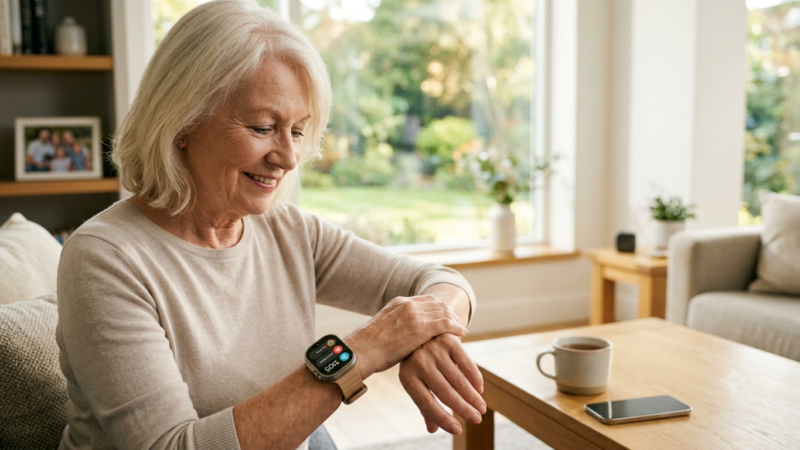
Today’s best smartwatches aren’t just glorified notification mirrors. They’re personal health hubs capable of tracking blood glucose trends, detecting irregular heart rhythms, measuring stress levels through skin conductance, and even flagging potential sleep apnea. They’re fitness coaches, payment terminals, navigation tools, and AI-powered assistants — all strapped to your wrist.
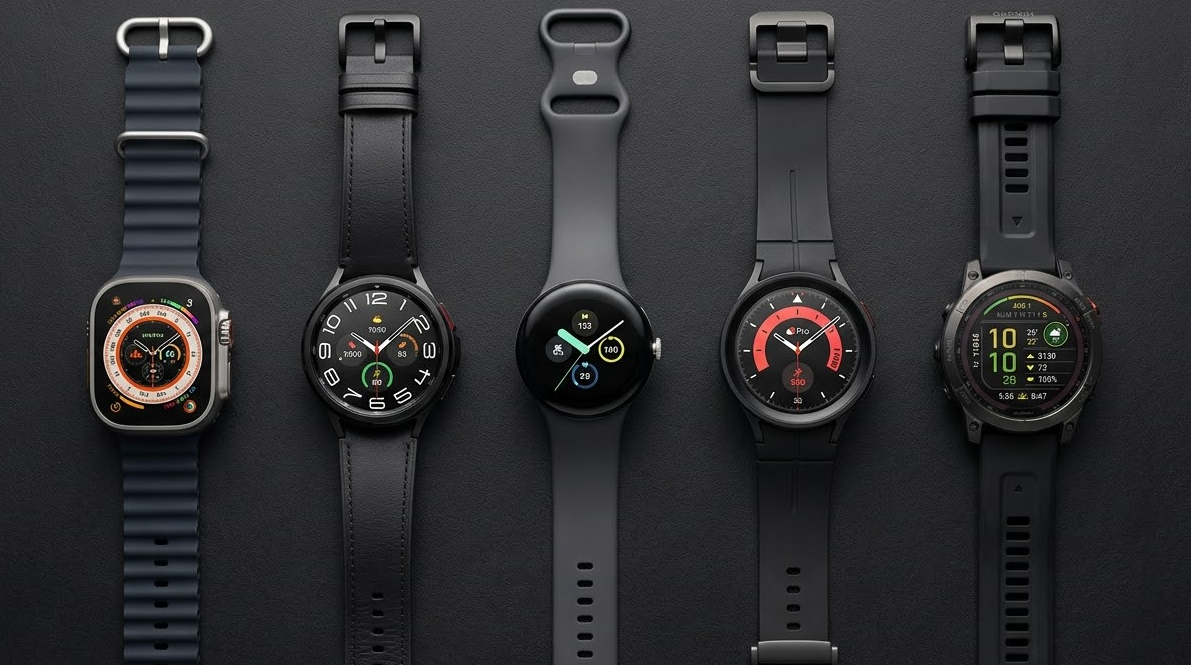
The market has matured dramatically. Apple, Samsung, and Google have all refined their flagships to near-perfection, while brands like Garmin dominate the serious fitness segment and Amazfit continues to disrupt with outstanding value.
Whether you’re a marathon runner chasing sub-3 hours, an office professional who wants seamless smartphone integration, or someone newly focused on long-term health monitoring, the best smartwatch for you exists — and this guide will help you find it.
We’ve tested and researched every major option to bring you the most comprehensive smartwatch buying guide for 2026. Here’s everything you need to know.
Quick Comparison: Best Smartwatches 2026 at a Glance
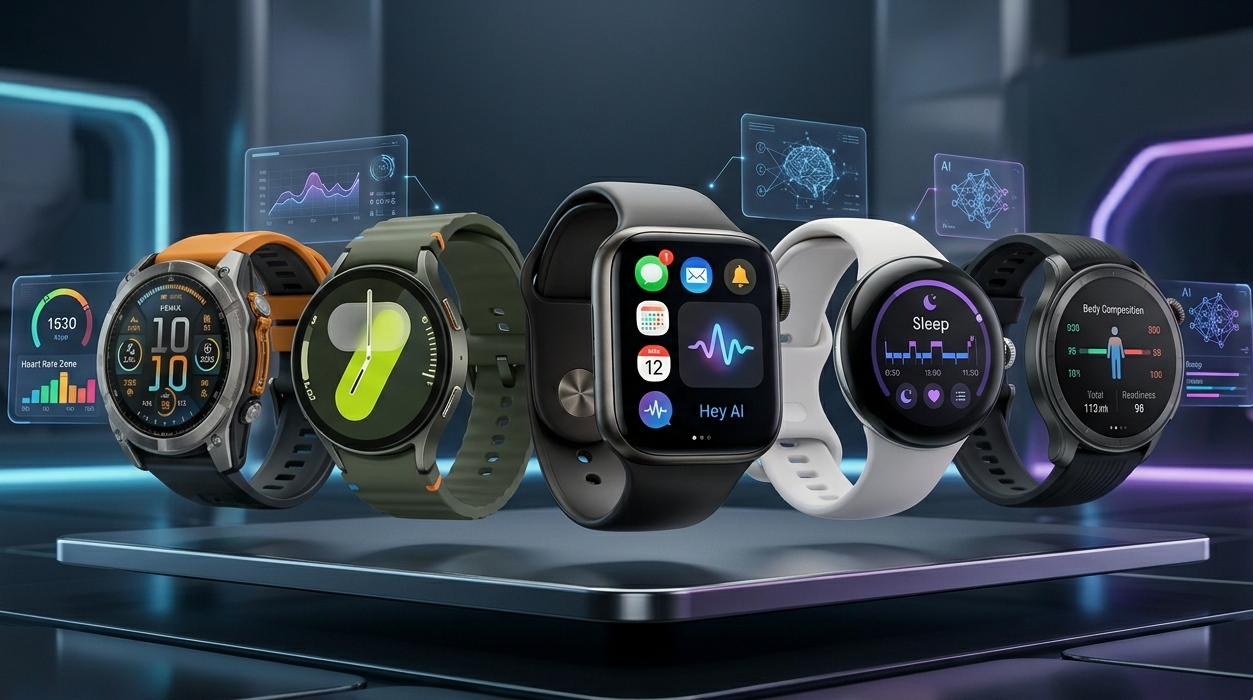
| Smartwatch | Best For | Key Features | Battery Life | Price Range |
|---|---|---|---|---|
| Apple Watch Series 10 | iPhone users & health tracking | ECG, blood oxygen, crash detection, AI health insights | ~36 hours | $399–$499 |
| Samsung Galaxy Watch 7 | Android users & fitness | Body composition, sleep coaching, Wear OS 5 | ~40 hours | $299–$349 |
| Google Pixel Watch 4 | Deep Google integration | Fitbit health suite, Gemini AI, AMOLED display | ~36 hours | $349–$449 |
| Garmin Fenix 8 | Serious athletes & outdoors | Multi-band GPS, solar charging, 60+ sport modes | 16–29 days | $799–$999 |
| Amazfit Balance | Budget-conscious users | AMOLED, 14-day battery, AI fitness coach | ~14 days | $179–$199 |
The Best Smartwatches in 2026: Full Reviews
Apple Watch Series 10
The Apple Watch Series 10 is, simply put, the most polished smartwatch ever made for iPhone users. Apple took the ultra-thin design language introduced in its predecessors and pushed it further, resulting in a watch that disappears on your wrist. But this isn’t a “thin for thin’s sake” situation — the internals are meaningfully upgraded.
The Series 10 introduces an enhanced health sensor array with second-generation blood oxygen monitoring, a more accurate ECG, and a new skin temperature sensor that works continuously throughout the day. The star addition, though, is the on-device AI health analysis — Apple Watch can now surface trends and flag anomalies across weeks of health data, offering insights that go far beyond raw numbers.
WatchOS 11 is deeply integrated with iOS 18, meaning your iPhone and Apple Watch feel like a single unified system rather than two devices communicating awkwardly.
Key Features:
- Always-on LTPO OLED display, 2000 nits peak brightness
- Second-gen blood oxygen and ECG sensors
- Continuous skin temperature monitoring
- Apple Intelligence health insights
- Crash detection, fall detection, and emergency SOS via satellite
- Apple Pay, NFC, and on-device Siri
- Sleep tracking with sleep apnea detection
Pros:
- Best-in-class health tracking for iPhone users
- Tightest ecosystem integration available
- Stunning, slim design with excellent display
- WatchOS is mature, stable, and feature-rich
- Growing third-party app library
Cons:
- Battery life still averages around 36 hours — always a one-day watch
- Completely useless without an iPhone
- Premium pricing with incremental year-over-year upgrades
Best For: iPhone users who want the most seamless, feature-complete smartwatch experience and prioritize health monitoring over battery life.
Samsung Galaxy Watch 7
Samsung’s Galaxy Watch 7 is the benchmark for Android smartwatches in 2026, and it isn’t particularly close. Running Wear OS 5 with Samsung’s One UI Watch 6 on top, it offers the deepest feature set of any Android wearable while remaining genuinely comfortable to wear all day.
The headline health feature is Samsung’s BioActive Sensor 3.0, which now offers more accurate body composition analysis — measuring skeletal muscle mass, body fat percentage, and hydration levels directly from your wrist. Pair this with the overhauled Samsung Health app and the AI-powered sleep coaching feature, and you have a health platform that rivals Apple’s in depth.
One area where Samsung deserves particular credit is cross-platform compatibility. While the Galaxy Watch 7 is optimized for Samsung Galaxy phones, it works admirably with any Android device running Android 8.0 or later.
Key Features:
- 1.5-inch Super AMOLED, 480 x 480 resolution
- BioActive Sensor 3.0 with body composition analysis
- AI-powered sleep coaching and energy scoring
- ECG and blood pressure monitoring (region-dependent)
- Wear OS 5 + One UI Watch 6
- Google Pay and Samsung Pay
- 5ATM + IP68 water resistance
Pros:
- Best health tracking suite in the Android ecosystem
- Gorgeous, crisp Super AMOLED display
- Works with any Android phone, not just Samsung
- Rich app ecosystem through Google Play
- Strong build quality and comfortable fit
Cons:
- Battery life (~40 hours) still requires daily charging
- Some advanced features locked to Samsung phones
- Blood pressure monitoring not available in all regions
Best For: Android users who want comprehensive health tracking, a polished interface, and deep Google app integration.
Google Pixel Watch 4
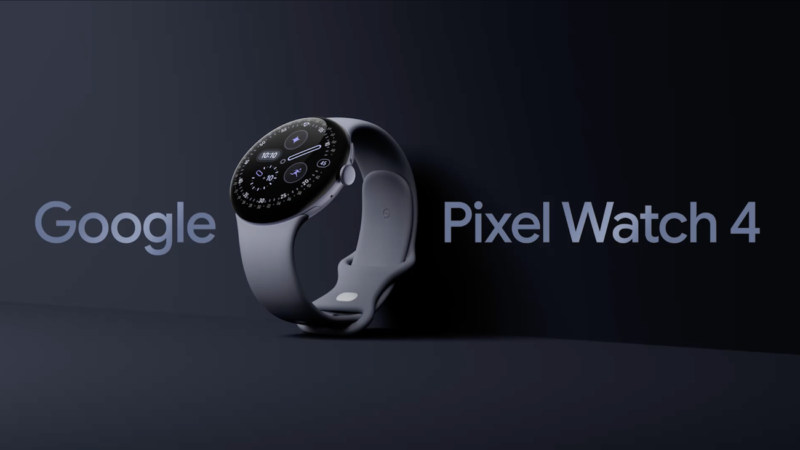
The Google Pixel Watch 4 represents Google finally delivering on the promise of what a deeply integrated Wearable + AI combination can be. Built on a refined circular design with a significantly thinner profile than its predecessors, the Pixel Watch 4 looks elegant in a way that early Pixel watches never quite achieved.
The real story here is Gemini. Google has embedded its Gemini AI assistant into the watch experience more deeply than any other platform — you can have natural voice conversations, get contextual health summaries, and even receive proactive suggestions based on your activity and health trends without touching your phone. It feels genuinely futuristic.
Fitbit’s health tracking platform, now fully mature after Google’s multi-year integration effort, brings class-leading sleep staging, stress monitoring, and Active Zone Minutes tracking.
Key Features:
- 1.4-inch AMOLED with always-on display
- Fitbit health suite: ECG, SpO2, skin temp, stress
- Gemini AI voice assistant (deep integration)
- Google Maps, Google Pay, YouTube Music offline
- Emergency SOS and fall detection
- Wear OS 5, 2-day battery claim
- LTE option available
Pros:
- Best Google/Gemini AI integration of any smartwatch
- Fitbit platform is excellent for long-term health data
- Clean circular design with premium build
- Works seamlessly with Pixel phones and all Android devices
- Google Pay and Maps integration are class-leading
Cons:
- Still only 36-hour real-world battery life on typical use
- Ecosystem less rich than Apple or Samsung in some health features
- Premium price for what is still a relatively new platform
Best For: Pixel phone owners, Google power users, and anyone who wants cutting-edge AI assistant integration in a smartwatch.
Garmin Fenix 8
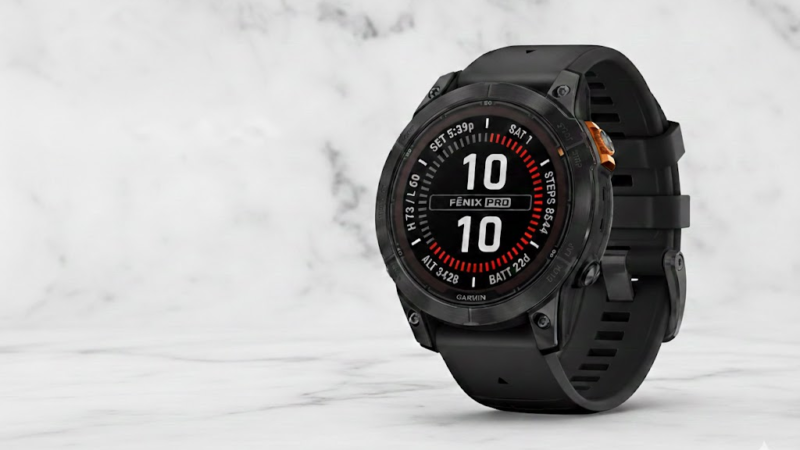
No smartwatch on this list can touch the Garmin Fenix 8 for serious athletes. This is the gold standard for endurance sports, trail running, mountaineering, and any activity where you need precise data, rugged construction, and a battery that doesn’t quit after a day.
The Fenix 8 runs multi-band GPS (using both L1 and L5 signals) for sub-meter accuracy in dense urban environments and deep forests — a game-changer for trail runners and hikers. The solar-charging sapphire lens edition can push battery life to over 29 days in smartwatch mode with adequate sun exposure. In GPS mode, you’re looking at 90+ hours, which is enough for most ultramarathons.
Health and training features are exhaustively deep: VO2 max estimation, training load analysis, Body Battery energy monitoring, HRV status, race predictor, and real-time coaching. Garmin’s Connect IQ app store is mature and well-suited to athletic use cases.
The Fenix 8 is not a fashion accessory and doesn’t try to be. It’s a serious tool for serious athletes — thick, robust, and uncompromising.
Key Features:
- Multi-band GPS (L1/L5) with topographic maps preloaded
- Up to 29 days battery (solar sapphire edition, smartwatch mode)
- VO2 max, training load, race predictor, HRV status
- 60+ sport modes including open water swimming and ski touring
- Titanium bezel, sapphire lens, 10ATM water resistance
- Garmin Pay
- Built-in LED flashlight (new in Fenix 8)
Pros:
- Unmatched GPS accuracy and mapping for outdoor athletes
- Best-in-class battery life among smartwatches with GPS
- Incredibly durable — military-grade MIL-STD-810 certified
- Training analytics go deeper than any consumer alternative
- Solar charging reduces top-up frequency dramatically
Cons:
- Expensive — the Sapphire Solar edition costs close to $1,000
- Large and heavy compared to fashion-oriented smartwatches
- Smart features (notifications, apps) are functional but basic
- Not ideal for casual or non-athletic users
Best For: Serious endurance athletes, ultrarunners, hikers, triathletes, and outdoor adventurers who need maximum performance data and durability.
Amazfit Balance
The Amazfit Balance is the undisputed champion of the budget-to-mid-range segment — and in 2026, it packs features that were flagship-only two years ago.
The Balance runs Zepp OS 4.0 with Zepp AI, an on-device assistant that analyzes your health data, provides daily readiness scores, and offers personalized workout suggestions. The 1.5-inch AMOLED display looks sharp and vibrant, and the 14-day battery life puts every flagship to shame. You genuinely only charge this watch twice a month.
Health tracking covers the essentials well: heart rate, SpO2, stress monitoring, sleep staging, and cycle tracking. The accuracy isn’t quite at Garmin or Apple levels, but it’s more than sufficient for most users.
For the price, the Amazfit Balance is extraordinary value.
Key Features:
- 1.5-inch AMOLED, 480 x 480 resolution
- 14-day battery life (5-day with always-on display)
- Zepp AI health coaching and readiness score
- Heart rate, SpO2, stress, sleep staging, cycle tracking
- 150+ sport modes with GPS
- Alexa built-in
- Works with iOS and Android
Pros:
- Outstanding battery life — 14 days is genuinely transformative
- Excellent AMOLED display at this price point
- AI health coaching adds real value for casual fitness users
- Compatible with both iPhone and Android
- Lightweight and comfortable for all-day wear
Cons:
- Health sensor accuracy lags behind premium options
- Zepp OS ecosystem lacks depth of WatchOS or Wear OS
- No ECG or blood pressure monitoring
- Build quality doesn’t match premium flagships
Best For: Budget-conscious buyers, first-time smartwatch users, or anyone who prioritizes long battery life over cutting-edge sensors.
Smartwatch Buying Guide: How to Choose in 2026
With so many options available, buying a smartwatch can feel overwhelming. This buying guide cuts through the noise and focuses on the factors that actually matter.
Compatibility: Android vs iPhone
This is the first filter to apply — and for many buyers, it narrows the field immediately.
If you have an iPhone: The Apple Watch Series 10 is the only logical choice if you want deep integration. It’s the only smartwatch that works fully with iOS features like iMessage replies, AirPlay controls, Handoff, and Apple Health synchronization. Third-party options like Garmin and Amazfit work with iPhone but offer limited smart features.
If you have an Android phone: You have more flexibility. Samsung Galaxy Watch 7 and Google Pixel Watch 4 both offer deep Android integration. Galaxy Watch works with any Android phone, while Pixel Watch is optimized for Pixel devices. Garmin and Amazfit work cross-platform with Android as well.
For cross-platform use: Garmin and Amazfit are the best options if you switch between platforms or share a watch across devices.
Battery Life
Battery life remains one of the most divisive specs in smartwatches. Here’s a practical breakdown:
- ~24–36 hours (Apple Watch, Pixel Watch, Galaxy Watch): You’ll charge these nightly. If that’s acceptable, these offer the richest feature sets.
- ~14 days (Amazfit Balance, Amazfit GTR series): Charge twice a month. You sacrifice some sensor precision but gain lifestyle freedom.
- 16–29 days (Garmin Fenix 8): Exceptional for outdoors and travel. Ideal if you need GPS tracking for multi-day activities.
Health and Fitness Tracking
Not all health tracking is created equal. Consider what you actually need:
- Casual health monitoring (steps, sleep, heart rate): Any watch on this list handles this competently.
- Clinical-grade metrics (ECG, blood pressure, SpO2): Apple Watch Series 10, Samsung Galaxy Watch 7, and Google Pixel Watch 4.
- Advanced fitness analytics (VO2 max, training load, race predictor): Garmin Fenix 8 is unrivaled.
- Passive lifestyle tracking (HRV, recovery, sleep): Garmin Fenix 8 leads with Body Battery and HRV Status; Amazfit Balance offers solid passive tracking at a budget price.
GPS and Workout Modes
For runners, cyclists, and hikers, GPS quality matters enormously. Garmin’s multi-band GPS is the most accurate available in a consumer wearable. Apple, Samsung, and Google all offer solid GPS with regular updates, but in dense forests or urban canyons, Garmin’s dual-frequency system maintains a clear advantage.
If you’re serious about outdoor navigation with offline maps, Garmin Fenix 8 is the only real choice. For gym workouts, casual running, and city use, any flagship smartwatch will serve you well.
Smart Features: Calls, Notifications, Payments
Premium smartwatches in 2026 all support:
- Call management from the wrist (via Bluetooth or LTE variants)
- Notification mirroring for texts, emails, and apps
- Contactless payments (Apple Pay, Google Pay, Samsung Pay, Garmin Pay)
- Voice assistants (Siri, Google Assistant, Alexa on Amazfit)
LTE-capable models (available as upgrades on Apple, Samsung, and Pixel) let you leave your phone at home for short runs or errands — a meaningful quality-of-life upgrade worth considering.
Display Quality
OLED and AMOLED displays are now standard across all flagship smartwatches, delivering vibrant colors and deep blacks. Look for:
- Peak brightness of 1000+ nits for outdoor visibility
- Always-on display support if you check time frequently
- Sapphire crystal lens for scratch resistance (standard on Garmin Fenix 8, optional on Apple Watch Ultra)
Durability and Water Resistance
Most smartwatches in 2026 offer 5ATM water resistance — suitable for swimming laps in a pool. The Garmin Fenix 8 pushes to 10ATM with MIL-STD-810 durability certification, making it suitable for diving and extreme conditions.
For everyday use, any watch rated 5ATM or higher is fine for showers, swimming, and rain. Don’t stress over this spec unless you’re doing serious water sports or working in harsh environments.
Best Smartwatch by Category
Best Smartwatch for Fitness
Winner: Garmin Fenix 8
For serious athletes, nothing comes close. Multi-band GPS, VO2 max tracking, race predictor, over 60 sport modes, and a battery that outlasts your longest training block. If you’re training for a marathon, triathlon, or ultramarathon, this is the only watch you should consider.
Runner-up: Apple Watch Series 10 — for casual to intermediate fitness users who want solid workout tracking within the Apple ecosystem.
Best Smartwatch for Android
Winner: Samsung Galaxy Watch 7
The deepest feature set, the most refined Wear OS experience, and an outstanding health platform make the Galaxy Watch 7 the top Android wearable in 2026. It works with any Android phone and syncs natively with Google services.
Runner-up: Google Pixel Watch 4 — especially compelling for Pixel phone owners and Gemini AI enthusiasts.
Best Smartwatch for iPhone
Winner: Apple Watch Series 10
This isn’t even a debate. The Apple Watch is the only smartwatch purpose-built for iPhone, and the integration depth is unmatched. If you’re in the Apple ecosystem, there’s no reason to look elsewhere.
Best Smartwatch for Battery Life
Winner: Garmin Fenix 8 (Solar)
Up to 29 days in smartwatch mode. Nothing else comes close at this level of functionality.
Budget winner: Amazfit Balance — 14 days of battery at a fraction of the price, ideal for users who don’t need Garmin’s athletic depth.
Best Budget Smartwatch
Winner: Amazfit Balance
At under $200, the Amazfit Balance delivers a sharp AMOLED display, Zepp AI health coaching, 150+ sport modes, built-in GPS, and 14-day battery life. It punches well above its weight and is the best value smartwatch available in 2026.
Best Smartwatch for Health Tracking
Winner: Apple Watch Series 10
The combination of second-gen sensors, Apple Intelligence health analysis, FDA-cleared ECG, sleep apnea detection, and continuous skin temperature monitoring makes the Series 10 the most comprehensive health wearable for most users.
Runner-up: Samsung Galaxy Watch 7 — body composition analysis and blood pressure monitoring (where available) make it a strong alternative for Android users.
Apple Watch Series 10 vs Samsung Galaxy Watch 7: Head-to-Head
These two watches represent the best of their respective ecosystems. Here’s how they compare where it matters most.
Design
Both watches are slim, stylish, and available in multiple sizes. The Apple Watch Series 10 features a rectangular case with rounded corners and Apple’s characteristic industrial design. The Galaxy Watch 7 opts for a circular case with a more traditional watch aesthetic. Design is subjective — circular vs rectangular is largely a personal preference, though the circular Galaxy Watch appeals to users who prefer a conventional watch look.
Battery Life
Samsung’s Galaxy Watch 7 edges ahead here, offering approximately 40 hours of real-world use compared to Apple Watch’s 36 hours. Neither watch makes it comfortably through two full days without charging, so practically speaking, both require nightly top-ups.
Fitness Tracking
Apple Watch Series 10 offers excellent activity tracking, automatic workout detection, and integration with Apple Fitness+. However, Samsung’s BioActive Sensor 3.0 adds body composition analysis — a feature Apple lacks — giving health-focused Android users a genuine advantage in metabolic tracking.
Health Features
Both offer ECG and SpO2 monitoring. Apple Watch adds sleep apnea detection (FDA-cleared) and skin temperature. Samsung adds body composition and blood pressure monitoring (in supported regions). At the flagship level, these two are remarkably close — the edge goes to Apple if sleep apnea detection is a priority, and to Samsung if blood pressure monitoring is available in your region.
Ecosystem Compatibility
This is where they fundamentally diverge. Apple Watch is iPhone-only — full stop. Galaxy Watch works with any Android phone, with deeper integration on Samsung Galaxy devices. If you use an iPhone, the Apple Watch wins automatically. If you use any Android phone, the Galaxy Watch 7 is your best option.
Frequently Asked Questions About Smartwatches
Are smartwatches worth buying in 2026?
Yes — more so than ever. Smartwatches in 2026 offer genuinely clinically meaningful health data, including ECG, sleep apnea detection, blood oxygen monitoring, and HRV tracking. For anyone interested in proactive health management, fitness optimization, or simply staying connected without constantly checking their phone, a smartwatch delivers real daily value. The technology has matured to the point where these are essential tools, not novelties.
What smartwatch has the best battery life?
The Garmin Fenix 8 Solar wins convincingly with up to 29 days in smartwatch mode. For users who don’t need Garmin’s athletic depth, the Amazfit Balance delivers 14 days at under $200. If you want a flagship smartwatch from Apple, Samsung, or Google, expect to charge nightly — all three offer approximately 36–40 hours of real-world battery life.
Which smartwatch is best for fitness tracking?
Garmin Fenix 8 is the undisputed champion for serious athletes, offering multi-band GPS, VO2 max analysis, 60+ sport modes, and training load management. For casual to intermediate fitness users, Apple Watch Series 10 and Samsung Galaxy Watch 7 both offer excellent workout tracking with automatic detection and guided programs.
Can a smartwatch work without a phone?
Most smartwatches require a paired smartphone for initial setup and app downloads. However, LTE-enabled models (available for Apple Watch, Samsung Galaxy Watch, and Google Pixel Watch) can make calls, stream music, receive notifications, and use navigation without a phone nearby. Garmin watches can also track GPS workouts completely independently.
What is the best smartwatch for Android users?
The Samsung Galaxy Watch 7 is the best smartwatch for Android users overall, offering the deepest Wear OS experience, excellent health tracking, and compatibility with any Android device. The Google Pixel Watch 4 is a strong second choice, particularly for Pixel phone users who want tight Gemini AI integration.
The Future of Smartwatches
The smartwatch industry is moving faster than ever, and the next few years promise significant leaps in capability.
AI-Powered Health Monitoring is the biggest trend reshaping the market. Watches are moving beyond data collection into genuine health prediction — flagging potential health events before symptoms appear, tracking metabolic markers, and offering personalized recommendations based on longitudinal data. Expect on-device AI to become standard across all price points by 2027.
Non-Invasive Blood Glucose Monitoring has been the holy grail of consumer wearables for years. Several companies including Apple and Samsung are reportedly close to a reliable, non-invasive solution. When this lands — likely in 2026 or 2027 — it will transform the smartwatch from a fitness accessory into an indispensable medical device for hundreds of millions of people.
Longer Battery Life continues to improve incrementally. The introduction of more efficient processors and improved solar technology means that genuinely week-long battery life may reach flagship smartwatches within two to three years.
Smart Home and AI Assistant Integration is deepening. Watches in 2026 can control smart home devices, trigger automation routines, and interact contextually with AI assistants. As Gemini, Siri, and Bixby become more capable on-device, the smartwatch becomes a natural ambient computing interface.
Final Verdict: Which Smartwatch Should You Buy in 2026?
The best smartwatch in 2026 depends entirely on your priorities — there is no single universally perfect option.
- Best overall for iPhone users: Apple Watch Series 10. Seamless iOS integration, best-in-class health monitoring, and a mature app ecosystem make this the easy choice if you’re in the Apple ecosystem.
- Best overall for Android users: Samsung Galaxy Watch 7. Deep Wear OS integration, body composition analysis, and compatibility with any Android device place it firmly at the top of the Android wearable category.
- Best for serious athletes: Garmin Fenix 8. If you train hard, race often, or spend significant time in the outdoors, no watch on Earth delivers what the Fenix 8 does. The price is steep, but so is the performance.
- Best value: Amazfit Balance. At under $200, this watch makes two-week battery life and AI health coaching accessible to everyone. It’s the easiest recommendation for first-time smartwatch buyers or budget-conscious shoppers.
Whatever your budget, lifestyle, or health goals — 2026 is an outstanding time to invest in a smartwatch. The technology is mature, the health data is meaningful, and the experience has never been smoother.
Related Articles: